Yellow September: How the Reiki Therapist Can Contribute to Valuing Life
When September arrives, we are invited to look more closely at the value of life. In Brazil, Yellow September also connects with suicide prevention initiatives within the SUS (Brazil’s Unified Health System) and with the need to expand listening, support, and care for people experiencing emotional distress.
And we, as Reiki therapists, can also contribute within the limits of our professional practice.
It is important to understand that Reiki does not replace medical, psychological, or psychiatric care when these are necessary. However, it can be used as a complementary practice for care and well-being, offering a moment of pause, support, presence, and attention to the person.
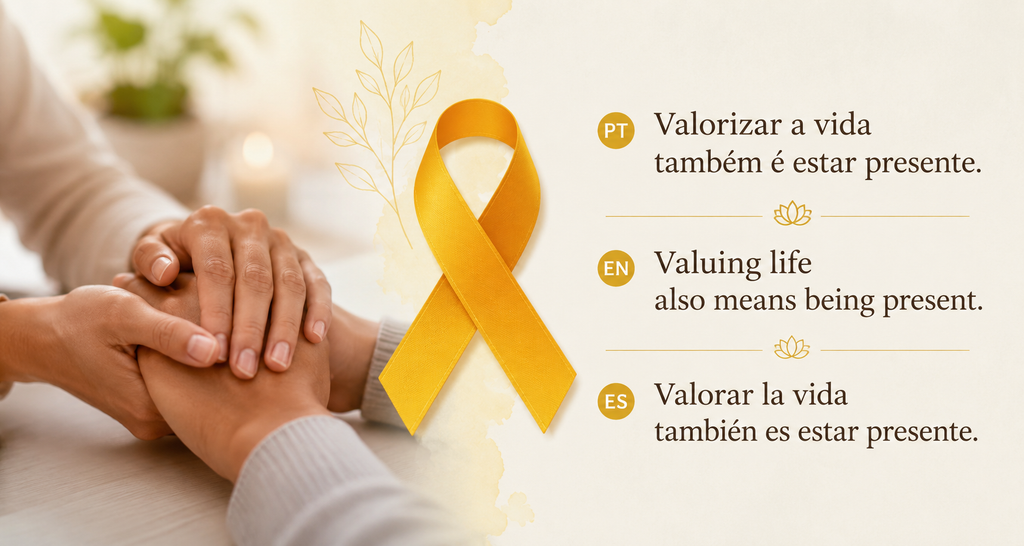
When we conduct an in-person session, there is also the human experience of care. The person may feel that someone is there, present, dedicating time exclusively to them. Touch, when used as part of the technique and with consent, or the proximity of the hands may contribute to making that moment a space of comfort and support.
I have had experiences that have deeply marked my journey as a Reiki therapist.
On one occasion, I accompanied a client in person who was experiencing intense depressive distress. She remained in bed and had difficulty even carrying out her own personal hygiene. We began a complementary approach with frequent Reiki sessions. Over the following days, I noticed small changes. On the third day, she was able to get up. After approximately one week, she was able to leave the house and go to the market.
I consider every small movement toward life to be a great victory.
I am not saying that Reiki alone is responsible for the recovery of a person with depression. Every human being has a history, a support network, and specific needs. But in my experience, I observed how consistency of care, presence, and a complementary therapeutic space can be part of a meaningful process.
In distance sessions, I usually create a space of presence.
I turn on the camera and remain with the person throughout the session. I ask them to be in a comfortable environment, lying down or sitting, stepping away for a few moments from the distractions of the day.
I invite the person to place their own hands over certain points on the body, consciously following the session. In this way, they also actively participate in that moment of self-care, noticing their body, breathing, and sensations.
This experience can be very comforting.
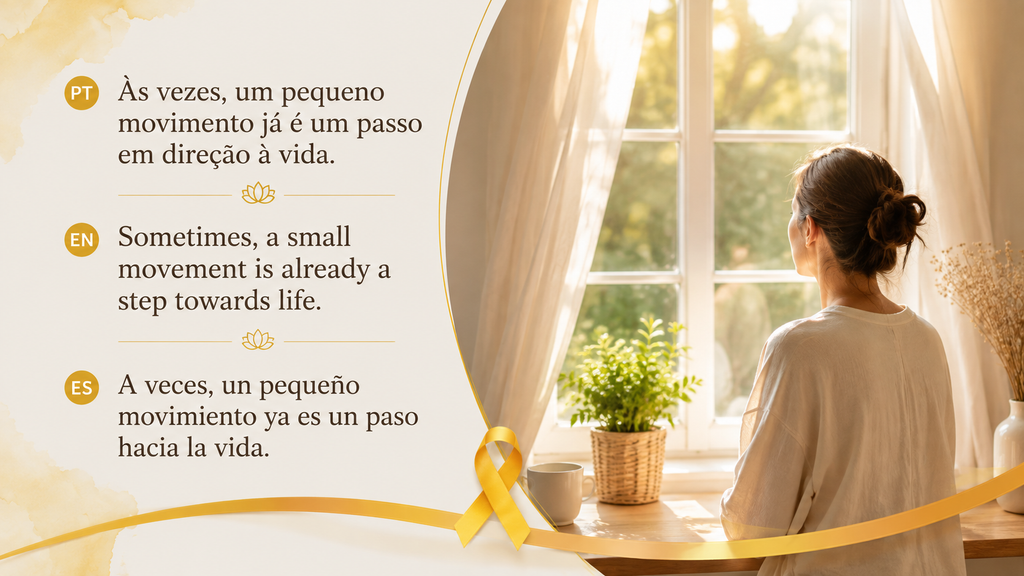
I also had a client who, during her first session, could not even open the window. She remained in a completely dark environment and had difficulty even allowing me to see her face during the session.
Little by little, respecting her own pace, we created a space of trust.
I began inviting her, whenever she felt comfortable, to open the window slightly and allow the light to come in.
These are small movements, but for someone experiencing deep suffering, they can represent very important steps.
As a psychoanalyst, I have specific training in the management of clinical listening. But I also teach my Reiki students something very important: the Reiki therapist does not need to, and should not, try to take the place of a psychologist, psychoanalyst, or physician when they do not have that professional training.
But they can offer support.
They can listen.
They can be present.
They can ask, respectfully:
“How are you feeling?”
Many times, when a person speaks, they also begin to listen to themselves.
What was confused, kept inside, or even unconscious can begin to emerge through words. Sometimes, while speaking, a person realizes something they had not yet been able to name.
The role of the Reiki therapist is not to clinically interpret what they are not qualified to interpret. It is to offer an ethical, supportive, and respectful presence and, when necessary, recognize that the person needs another type of professional support.
Within integrative therapies, there are different traditional systems that relate emotions, the body, and processes of balance.
Traditional Chinese Medicine, for example, has its own perspective on the relationships between emotional aspects and certain systems of the body.
Indian traditions, on the other hand, work within their own frameworks with energy centers known as chakras and their symbolic and bodily associations.
There are also authors who work with interpretations involving emotions, beliefs, and the body. One well-known example is Louise Hay, author of You Can Heal Your Life, which presents symbolic associations and reflections on emotional and physical patterns.
These references can be used as tools for reflection.
Another interesting possibility is to work with complementary self-care resources.
I also teach and work with flower essence systems, such as Bach Flower Remedies, Saint Germain, and Florais de Minas. Within an integrative approach, these resources can be part of a routine of care and reflection during the month, between Reiki sessions.
In addition, during in-person sessions, we can create a therapeutic experience using other complementary resources, according to each professional’s training and qualifications, such as meditation practices, chromotherapy, aromatherapy, music therapy, and other integrative therapies.
From the earliest levels of Reiki training, I consider it important to teach meditation and presence practices.
Mikao Usui left principles and practices that inspire an attitude of awareness, inner discipline, and personal development.
Throughout the training, this knowledge can be deepened.
At Level 3, many practitioners also develop the ability to conduct meditation practices and group Reiki gatherings, including during campaigns such as Yellow September.
In Brazil, it is common to find Reiki groups and gatherings offered free of charge or through forms of solidarity exchange, such as food donations. These spaces can be an opportunity for people to discover the practice and have their first contact with moments of pause, relaxation, and care.
That is how I discovered Reiki.
And that is how my passion for this technique began.
From that first contact, I pursued my training and began bringing Reiki into different contexts: to people, animals, environments, and my own life.
I believe that, as Reiki therapists, we can contribute to valuing life.
Yellow September reminds us of the importance of looking toward life.
And of reminding that person that, even when they cannot see a way forward, they do not have to walk alone.
It may be the moment when someone finally stops, breathes, speaks, listens to themselves, and begins, little by little, to take a new step toward their own life.
Editorial Note
This article presents Jailma Moraes’s experience and perspective on the role of the Reiki therapist in the context of Yellow September and the valuing of life.
Reiki is presented in this text as a complementary practice for care and well-being, not as a substitute for medical, psychological, or psychiatric care. In situations of intense emotional distress or risk to one’s own life, it is essential to seek help from qualified professionals and specialized services.
Mundo Reiki values dialogue between integrative practices, professional responsibility, ethical listening, and holistic care.
About the Author
Jailma Moraes holds a postgraduate degree in Integrative Therapies, with university extension studies in Traditional Chinese Medicine and Massage Therapy. She has worked as a therapist since 2014, dedicating her career to holistic care, professional training, and the dissemination of integrative practices.
You May Also Read
Shiatsu: Balance Through Touch
Another article by Jailma Moraes published by Mundo Reiki.