Oak: the majesty of those who sustain, and the wisdom of knowing one’s own limits
Letícia Giovelli
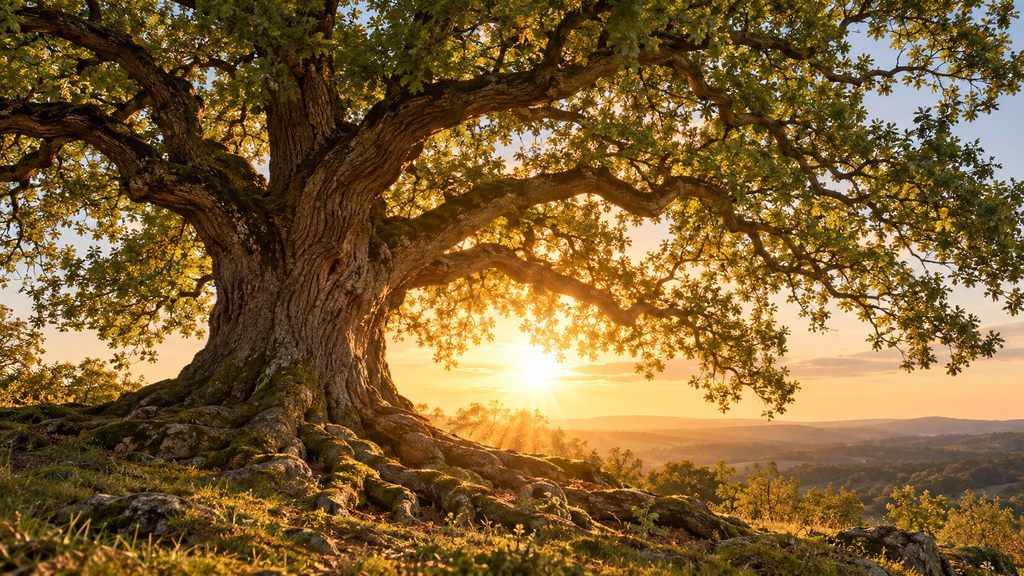
There are women who seem like trees.
Strong.
Present.
Generous.
Women who welcome, care, solve, organize. Who are always available when someone needs them. Who rarely leave a task unfinished.
They are the ones who say:
“Let me do it.”
And they do.
Even when tired.
Even when worried.
Even when the body begins asking for something else.
This is one of the images that Oak, one of the Bach Flower Remedies, invites us to contemplate.
The majesty of the oak lies precisely in its strength. It sustains, protects, offers shelter. There is something deeply welcoming about its presence. But even a majestic tree has its limits: it needs water, soil, time, and rest between one season and another.
And perhaps this is one of the great lessons that Oak can bring to women during the climacteric.
Strength does not mean unlimited availability.
For many years
For many years, a woman may have learned to recognize her value through doing.
- Taking care of the children.
- Taking care of the home.
- Working.
- Helping her parents.
- Being there for her partner.
- Emotionally supporting the family.
- Solving problems.
And while everyone finds a safe harbor in her, perhaps she herself has become accustomed to not asking:
“And me? What do I need?”
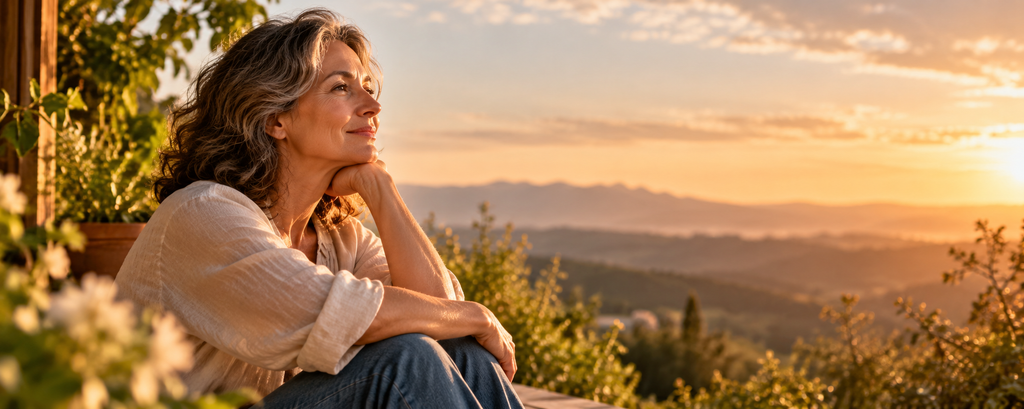
The climacteric may make this question impossible to ignore.
The body changes. Energy may fluctuate. Sleep may be different. One’s energy and willingness no longer necessarily respond to the same demands. And what used to be done almost automatically may begin to require much greater effort.
At this point, a woman may encounter a bewildering experience:
“I still want to do everything. But perhaps I can no longer do everything in the same way.”
This realization may bring frustration, guilt, or even a sense of loss.
But perhaps it is not loss.
Perhaps it is a call to develop a new relationship with one’s own strength.
A new relationship with one’s own strength
Oak can accompany this process precisely when a person remains strong in the face of difficulties, perseveres, and continues fulfilling responsibilities even when already exhausted.
Its lesson is not to abandon commitment, stop caring, or become indifferent.
It is something else.
It is learning to recognize when perseverance has ceased to be strength and has begun to turn into excess.
Because there is a delicate difference between being strong and not allowing oneself to stop.
Between welcoming and carrying.
Between being available and always being at everyone’s disposal.
Between doing something out of love and doing it because I cannot say no.
During the climacteric, knowing these limits can be a profound form of self-care.
Perhaps a woman does not need to stop being the one who sustains.
Perhaps she simply needs to discover that she, too, deserves to be supported.
That she can ask for help.
That she can rest before reaching her limit.
That she can choose what really needs to be done — and leave some things for later.
That she can say “no” without ceasing to be loving.
That she can care for others without disappearing from herself.
Respecting the season
The oak does not lose its majesty because it goes through winter.
It simply respects the season.
And perhaps there is a beautiful image here for this stage of life:
we do not need to abandon our strength in order to respect our limits.
We can continue to be a presence, welcoming, capable, and powerful — but in a more conscious way.
Perhaps maturity is precisely this:
knowing where what we can offer ends
and what we need to preserve begins.
Because even the strongest tree needs roots.
And caring for our own roots is also a way of caring for all those who find shade in our presence.
About the author
Letícia Giovelli
Caring for the soul is a journey… and I walk alongside you.
I have been a psychotherapist since 1995, passionate about understanding the human soul in its many layers — from silent pain to the deepest transformations.
In 2008, I broadened this perspective through flower therapy, becoming a Bach Flower therapist and, later, working with the Saint Germain and California flower systems. Subtle paths that access emotions, stories, and awaken possibilities for healing.