Why does everything irritate me?
When irritation may be saying more than simply a lack of patience
By Rosana Guiné — Niterói, RJ, Brazil
There are days when it feels as if the world has decided to test our patience.
The noise is bothersome.
The delay is irritating.
A simple question feels like too much.
Even something that normally would not bother you starts getting on your nerves.
And then comes that question:
Why is everything irritating me so much?

When something is not flowing
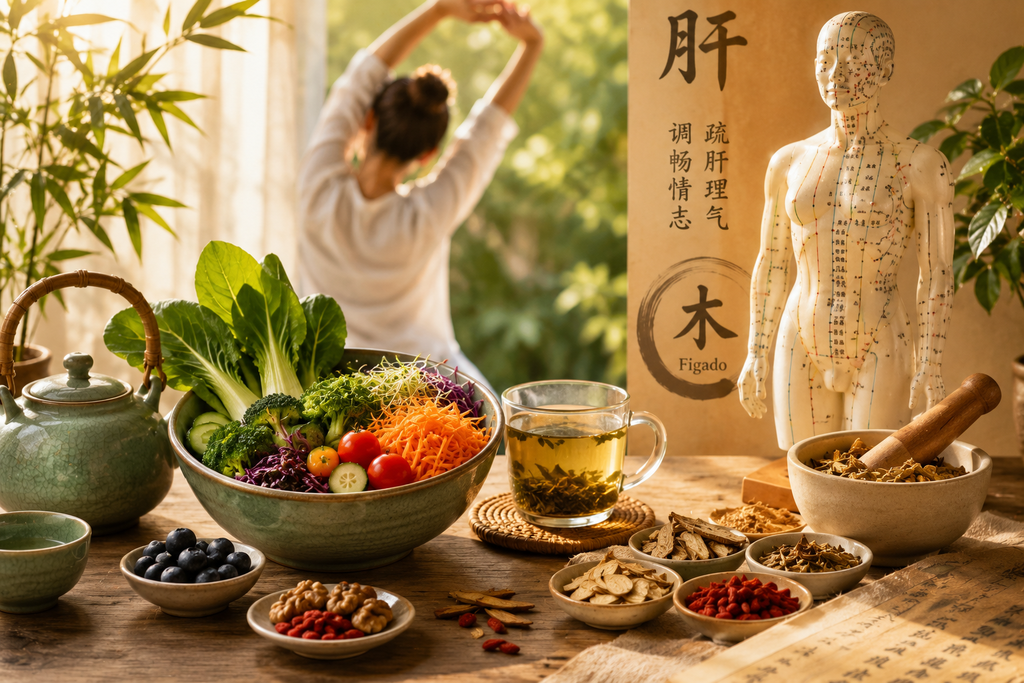
In Chinese Medicine, emotions are also part of understanding the body. And when we talk about irritability, frustration, impatience and anger, there is one organ that plays an important role in this story: the Liver.
This does not mean that every episode of irritation is simply a “Liver problem.” The perspective of Chinese Medicine is broader than that.
One of the functions attributed to the Liver is promoting the free flow of Qi—that is, the movement and proper circulation of energy throughout the body. When this movement is compromised, it may be associated with manifestations such as tension, frustration, irritability and a feeling of being “stuck.”
It is as if Qi needs to circulate but encounters obstacles along the way. And perhaps this image helps us understand why, in Chinese Medicine, irritability and frustration may be related to what is known as Liver Qi stagnation.
It is as if Qi needs to circulate but encounters obstacles along the way.
But what can you do when everything seems irritating?
If the idea is to encourage the movement of Qi, some simple attitudes may help.
Move your body. A walk, some stretching or any activity you enjoy can be a good way to move out of physical and mental stillness.
Take breaks. Breathing deeply, slowing down for a few minutes and interrupting a constant routine of tension can also make a difference.
Take care of your sleep. Repeatedly sleeping poorly can make anyone more reactive and less patient.
Food can also be part of this care. From the perspective of Chinese Medicine, it may be helpful to favour lighter and more regular meals, with vegetables and fresh foods, and to include, in moderation, foods with a naturally sour taste. It is also worth observing excessive alcohol, fried foods, very fatty foods and stimulants, especially when there is already a great deal of agitation or irritability.
This is not about banning foods or following a rigid list. The idea is to observe the whole picture and notice how your body responds.
When irritability begins to interfere
And what happens when irritability becomes frequent, intense or starts interfering with everyday life?
That is where individual assessment comes in.
Acupuncture may help promote balance and the free flow of Qi, but treatment is not chosen simply because someone is “out of patience.”
Two people may arrive saying exactly the same thing—“I’m very irritated”—and receive completely different treatments.
Because in Chinese Medicine, we do not treat irritability alone. We seek to understand the person who is feeling irritated.
- How is your sleep?
- Your digestion?
- Your energy?
- Is there tension?
- Changes in your cycle?
- A feeling of heat?
- Any other symptoms that have appeared alongside it?
It is the whole picture that tells the story.
What else has changed in you lately?
So, the next time you find yourself thinking “why is everything irritating me?”, it may be worth looking a little beyond the irritation itself.
What else has changed in you lately?
Sometimes, “I have no patience” may simply be the way the body has found to show that something is no longer flowing as well as it once did.
And that is precisely when an assessment through Chinese Medicine can make a difference.
From there, acupuncture seeks to understand what may lie behind that irritability and what other signs are present. The choice of points is not made simply to “calm the person down,” but to work with the energetic pattern that has been identified and help the body regain its balance.
Because, in Chinese Medicine, irritability is only one part of the story. Our work is to look at the whole story.
About the author
Rosana Guiné shares her reflections on Chinese Medicine, the body, emotions and different ways of understanding the human being as a whole through the Mundo Reiki Library.
Learn more about Rosana Guiné and her articles in the Mundo Reiki Library.