Reiki in Times of Climate Crises: How to Maintain Peace Amid Collective Fear
“How am I living what I say I believe?”
There is a question that, for me, is worth more than many explanations about Reiki:
“How am I living what I say I believe?”
It is a simple and perhaps even uncomfortable question, because it takes us away from the place where it is easy to talk about consciousness, energy, spirituality or transformation and places us face to face with concrete life.
With the way we wake up, the way we treat our bodies, how we respond to difficulties, the attention we give to the people who are with us and our ability to pause before reacting.
In recent times, we have received many reports of extreme climate events: intense rainfall, floods, heat waves, wildfires and other changes affecting different regions of the planet.
These are events that cross borders and remind us that we live in an increasingly connected world.
A situation that happens in one part of the planet can reach the phones of millions of people within minutes.
When we watch this news every day, it is natural to feel concerned.
After all, we are human beings and we live in society.
When someone suffers, in some way we are touched by that situation.
But there is an important difference between being informed and living emotionally inside a situation that is not happening to us.
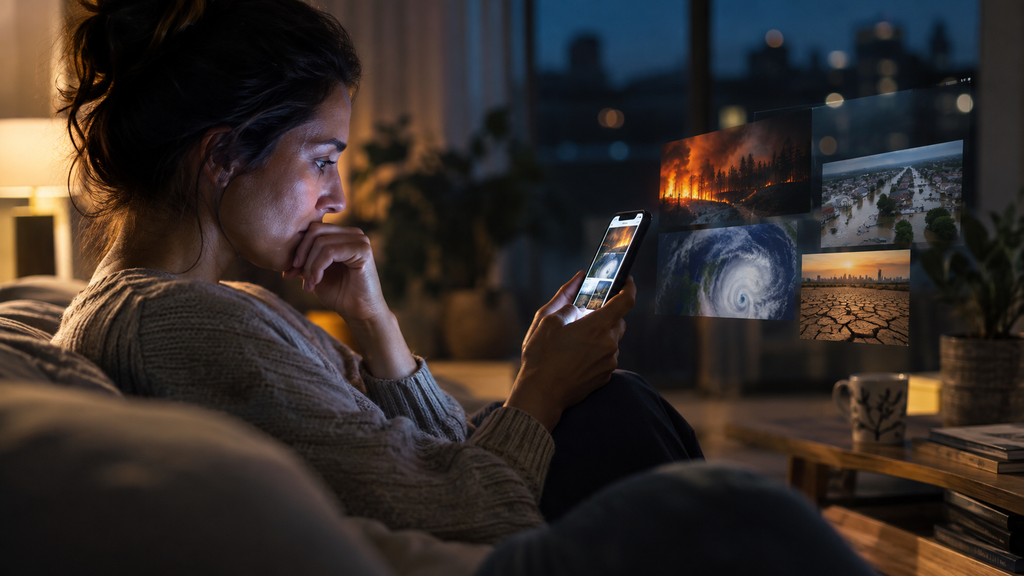
A person may be in a safe region, with no immediate risk, and still spend sleepless nights, imagine tragedies, feel afraid and follow the news compulsively.
This is when we also need to take care of our minds.
As a psychoanalyst, I observe that our minds can be strongly influenced by what we see, hear and imagine.
When we are repeatedly exposed to images of destruction, loss and suffering, we may begin to create within ourselves scenarios that have not yet happened.
Imagination is a wonderful tool, but it can also feed anxiety when it becomes trapped in fear.
Fear also travels through our screens
There is also a collective dimension to this fear.
We live in a connected society, receiving information all the time.
News that happens in a city, a country or another continent can reach the phones of millions of people within minutes.
And we may begin to feel as though we need to solve everything.
But we need to remember:
Not every problem that reaches us needs to be carried by us.
This does not mean being indifferent to another person’s suffering.
It means understanding the limits of our responsibility.
If someone is actually in a dangerous situation, seeking reliable information, following the guidance of authorities, finding a safe place, protecting their family and asking for help when necessary are essential actions.
We also need to support those who have lost their homes, their possessions, family members or someone they love.
Some losses leave deep marks and need to be respected.
Reiki can be a complementary resource for care, helping a person seek greater serenity, presence and emotional balance.
And perhaps this is precisely where we can also think of Reiki as a contemporary practice.
A contemporary Reiki in a changing world
Reiki can also be understood as a contemporary practice, situated in a world facing challenges that did not exist in quite the same way in previous times.
Today we are surrounded by information about wars, environmental crises, disasters, inequalities, social changes and so many other events that reach us in real time.
Being contemporary does not mean abandoning the principles of Reiki.
Perhaps it means precisely asking ourselves how we can live those principles in the reality we have today.
One of the principles of Reiki says:
“Just for today, do not worry.”
This principle does not mean ignoring problems.
It does not mean closing our eyes to what is happening in the world.
And it does not mean failing to take responsible action.
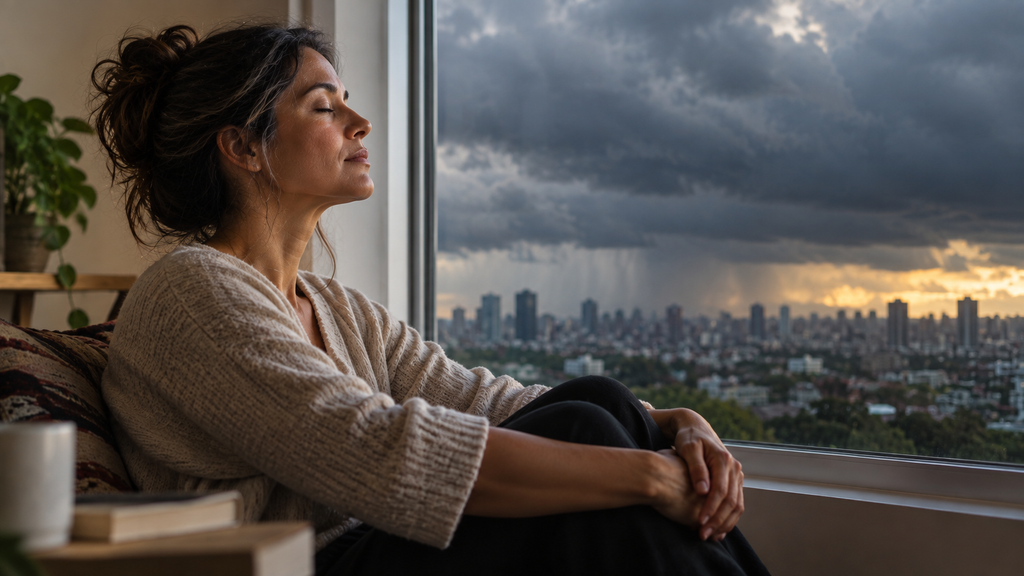
It invites us to return to the present.
Ask yourself:
What is happening to me right now?
Am I actually in danger at this moment?
Is there a concrete action I can take?
If there is, do what is within your reach.
If you are not in danger, perhaps it is time to breathe, return to the present and take care of your own peace.
Because spending hours consuming news, imagining tragedies and discussing everything that is beyond our control does not necessarily help those who are suffering.
Being informed is different from living emotionally inside the news.
A Reiki practitioner is also a citizen.
And caring for the planet is also a form of responsibility.
Climate crises do not concern only governments, organizations or large institutions.
They also invite us to look at our everyday choices and the way we relate to the environment.
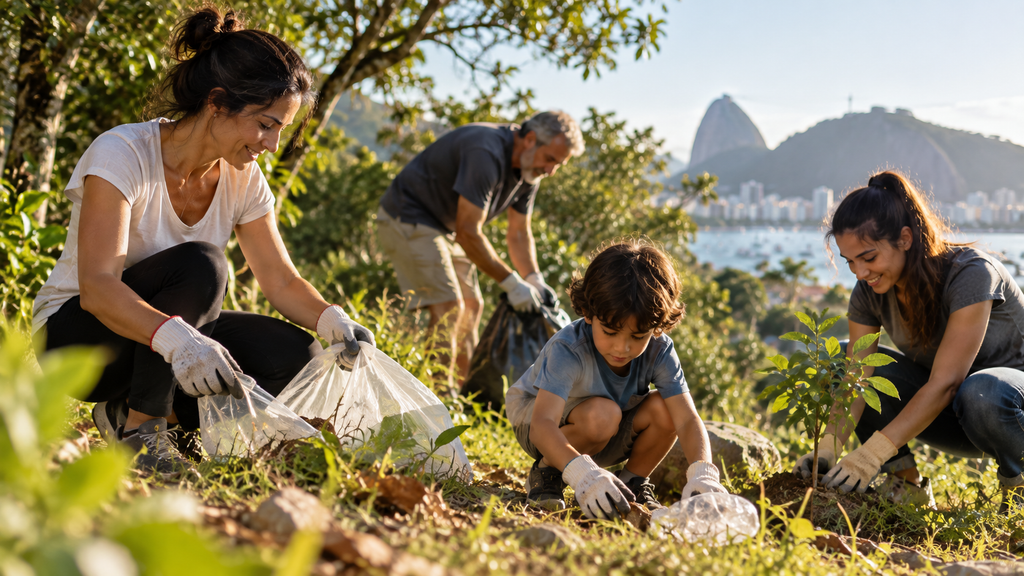
Caring also means taking action
We can do simple things:
not throw rubbish into the streets;
prevent waste from reaching drains;
separate materials for recycling;
avoid wastefulness;
care for green spaces;
never burn rubbish or land;
respect nature;
teach our children to care for the environment.
Every conscious action counts.
Taking care of ourselves does not mean turning away from the world.
And looking at the world does not mean carrying all the problems that reach us on our own.
Perhaps a contemporary Reiki also involves the ability to remain present in a world that constantly invites us to live in advance what has not yet happened.
Information. Responsibility. Presence. Care.
Perhaps this is how we can move through uncertain times without losing sight of what is within our reach.
And return, once again, to the present.
Just for today.
About the author
Jailma Moraes holds a postgraduate qualification in Integrative Therapies, with university extension studies in Traditional Chinese Medicine and Massage Therapy. She has worked as a therapist since 2014, dedicating her professional journey to holistic care, professional training and the dissemination of integrative practices.
Throughout her career, she has specialized in different therapeutic approaches, including Reiki, Traditional Chinese Medicine, Shiatsu, Aromatherapy, Flower Therapy, Reflexology and various forms of Massage Therapy, always with an integrated view of the human being.