They Don’t Know How to Play
Or Are We Not Allowing Them to Learn?
“They don’t know how to play anymore.”
I have heard this phrase at school, in families, and in conversations among adults. I see children surrounded by toys saying they have nothing to do. Children who start playing and soon abandon the game. Children who ask an adult for an activity, an idea, or a screen.
But I always wonder: does a child simply stop knowing how to play?
Or are we looking at a childhood that finds fewer and fewer opportunities to learn how to build its own play?
Free Play Requires More Than Toys
I have been thinking that free play requires more than toys.
It requires time, space, continuity, and freedom to experiment.
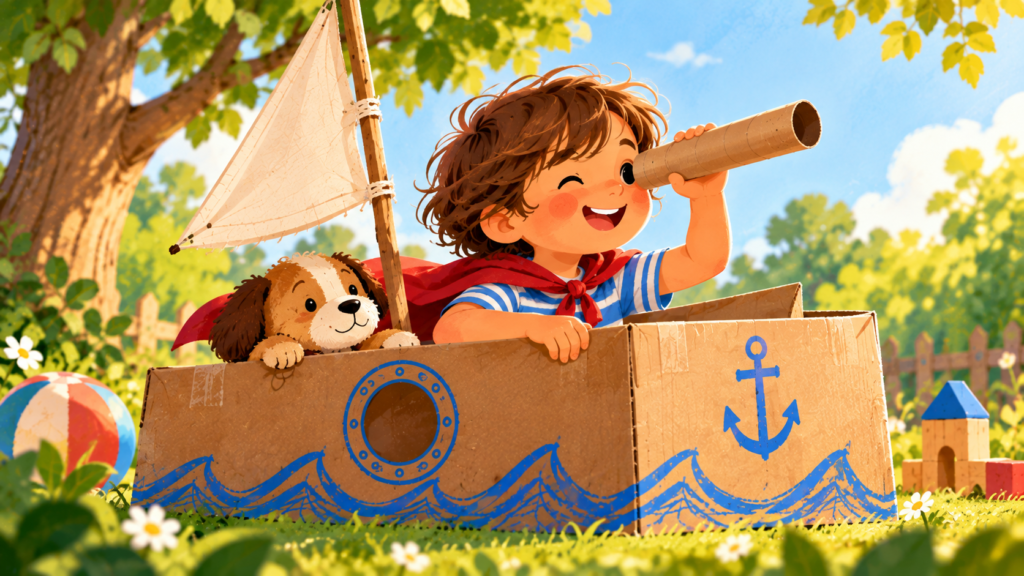
A box needs to be allowed to stop being a box and become a house, a ship, or a hiding place. A piece of fabric can become a cape, a tent, a dress, or a river. A story begins, changes direction, loses its appeal, and starts again.
None of this comes completely ready-made.
A child needs to imagine, decide, transform, sustain an idea, and create meaning from whatever they find.
And perhaps that is precisely where an important difference between playing and being entertained lies.
Entertainment offers an organized experience. Play requires the child to participate in its construction.
When the Experience Already Comes Ready-Made
In a childhood shaped by digital technologies, I notice that an extraordinary amount of narratives, images, and rewards arrives ready-made and at high speed. One video ends and another begins. A game presents objectives. A platform continuously offers whatever might capture attention over the next few seconds.
I do not believe technology and play are incompatible. Children also create, imagine, socialize, and learn in digital environments.
What concerns me is when receiving ready-made experiences progressively takes up the space for inventing them.
Then a scene we know well happens.
We take away the screen and hear:
“But what am I going to do?”
To me, this question says a great deal about contemporary childhood.
It does not necessarily mean that the child has lost the ability to play, but that they may be unaccustomed to the interval between having nothing to do and inventing something.
Because Play Is Also Learned Through Playing
Because play is also learned through playing.
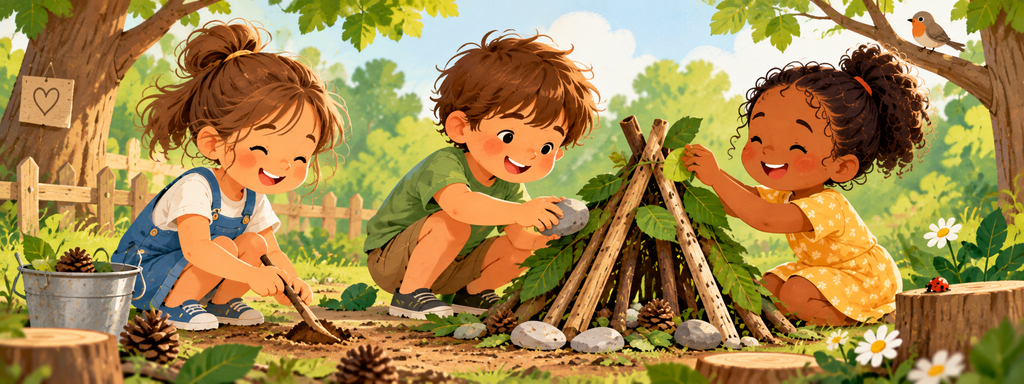
Children learn by moving through the initial boredom. By experimenting. Repeating. Negotiating rules. Finding other children. Transforming objects. Becoming frustrated when a construction falls apart and deciding whether it is worth starting again.
That is why I am careful when I hear that “children don’t know how to play anymore.”
“A child cannot learn to inhabit a time that we do not allow to exist.”
And perhaps we adults have also unlearned how to tolerate children’s boredom. Faced with “I have nothing to do,” we quickly offer an answer, an activity, or a screen.
But if we fill every interval, if we offer a stimulus for every wait and a solution for every discomfort, we leave little room for the fundamental question of play:
“What can I invent with this?”
Giving Back Time, Space, and a Little Emptiness
Perhaps the challenge of technological childhood is not to teach children how to play again.
Perhaps it is to give them back time, space, materials, companionship, and a little emptiness.
And, above all, to have the patience not to immediately fill that emptiness.
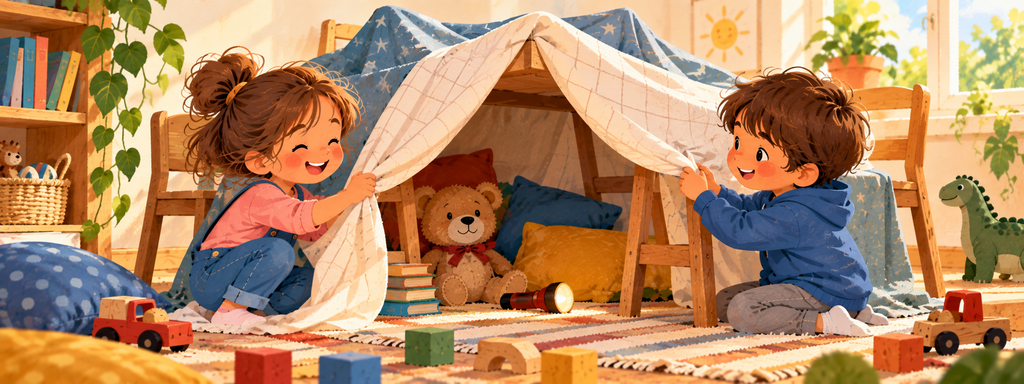
Because before play is born, there is often an apparently insignificant moment when a child simply does not know what to do.
“Perhaps that is precisely where play is beginning.”
About the Author
Vanessa Lima Nunes
Vanessa Lima Nunes is a pedagogue, literacy educator, specialist in Childhood Cultures, and neuropsychopedagogue. She works in Education and dedicates her work to understanding childhood, learning, and the different ways in which children express themselves and develop.
Throughout her career, she has developed an attentive perspective toward what children communicate not only through words, but also through the body, behavior, play, silence, drawing, music, and other forms of expression.