BEFORE REIKI: THE FORGOTTEN HISTORY OF HEALING THROUGH THE LAYING ON OF HANDS
Alfredo Aguilera Saldaña
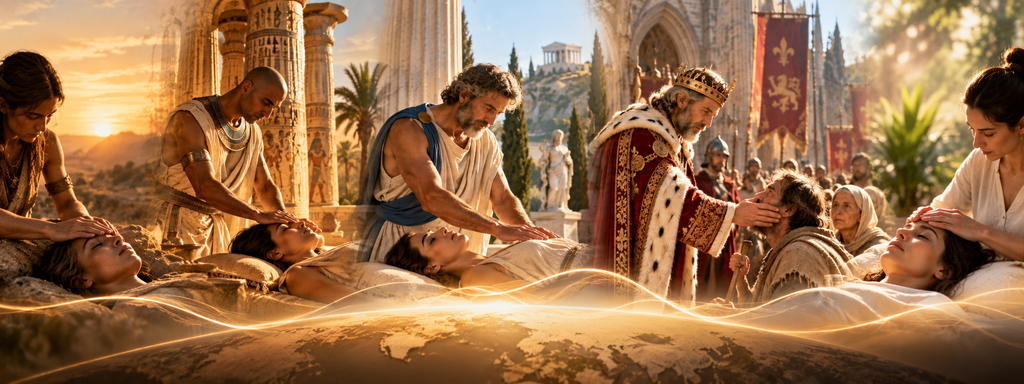
When we think about channeling energy or relieving pain using our palms, the first name that usually comes to mind is Reiki. However, the history of humanity reveals that the use of hands as bridges of relief, blessing, and restoration is not a modern invention nor exclusive to a single culture. It is an instinctive and sacred act that has left its mark on the texts and reliefs of the most important civilizations of antiquity.
Where does this practice really come from, and how did it manifest in other parts of the world thousands of years before our era?
The Primary Instinct and Biological Memory
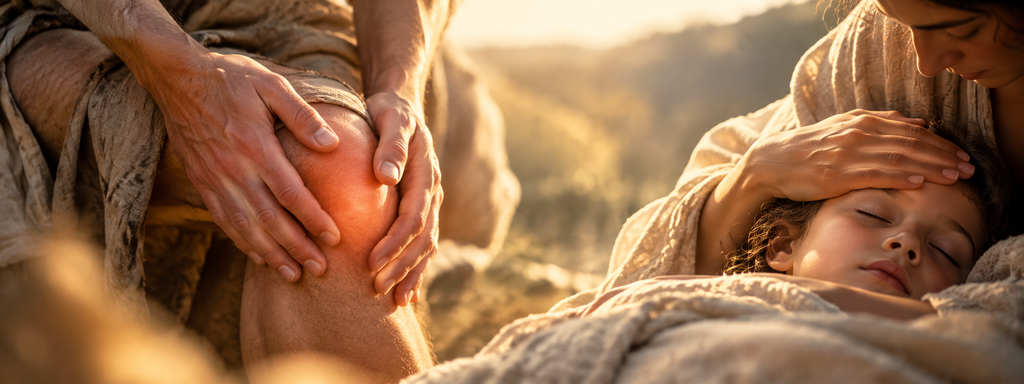
Before becoming a doctrine or system, the laying on of hands was born as a purely human reflex. Anthropology and medicine recognize that, when faced with a blow or pain, the first impulse of any person is to place their hands over the affected area. Likewise, a mother instinctively places her hand on the forehead of a child with a fever. At a biological level, touch conveys containment, but at a subtle level, ancient cultures understood that the hands act as transmitters and receivers of a vital force that sustains life.
Ancient Egypt: The Flow of the “Ka” and the Channels of Saqqara
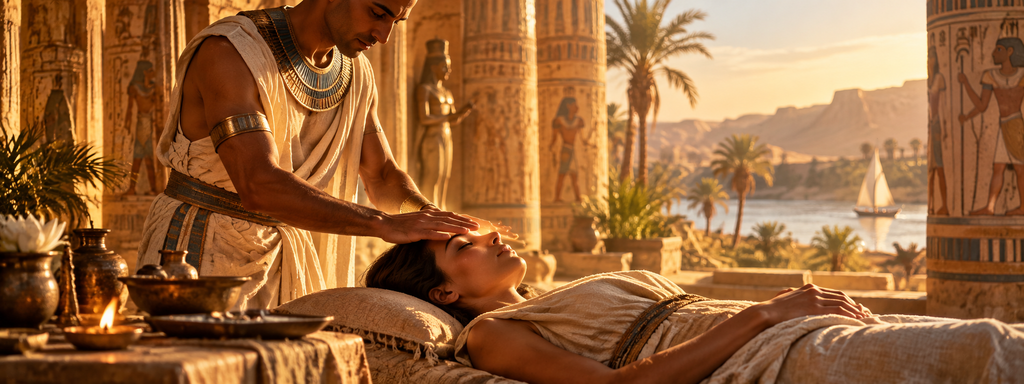
To find the earliest documented records of this practice, we must travel to the Nile Valley. In the bas-reliefs of the tombs of Saqqara, dating approximately to 2500 BCE, scenes can already be seen in which healers of the time place their hands over the head, back, or chest of the sick in order to restore their health.
The Egyptians did not see the body as merely flesh and bone. For them, the universe was permeated by a vital force called “Ka.” The healers of the Houses of Life were trained to channel this force through their own bodies, using it to dissolve the patients’ blockages. The right hand was considered the active emitter of energy, while the left acted as the receiving pole.
The Near East and the Biblical Tradition: “Semikhah” and the Restorative Touch
In Mesopotamian cultures and among the Hebrew people, the act of placing hands on someone carried profound legal, spiritual, and medicinal significance. In the tradition of the Old Testament, this gesture is known as “Semikhah” (the support or laying on of hands). Although it was initially used to transfer authority (such as when Moses laid his hands on Joshua to transmit wisdom to him), it was also applied in rituals of purification and well-being.
At the dawn of the Common Era, the Gospels document extensively that the principal healing tool of Jesus of Nazareth was his hands. Historical texts demonstrate that the Master did not resort to complex formulas or medicines of the time; it was enough for him to touch the blind, the lepers, or the afflicted for immediate recoveries to be reported. The first centuries of the Early Church continued this practice, incorporating the laying on of hands into their daily prayers for the sick as a direct channel of divine grace.
Classical Greece: The Temples of Asclepius
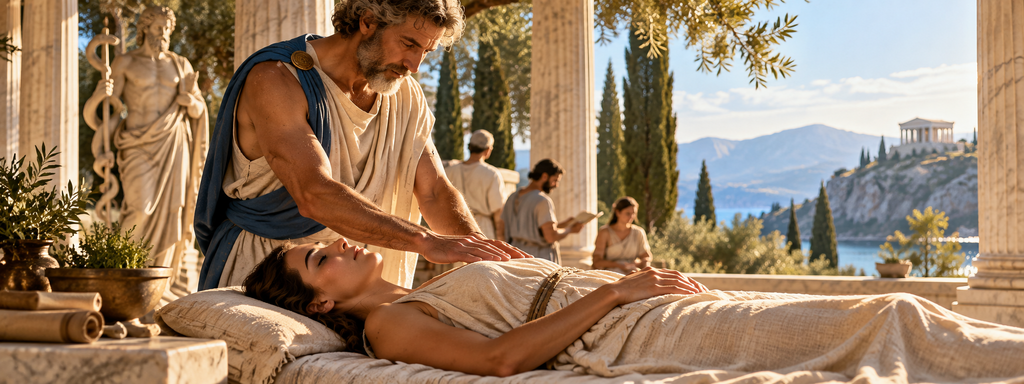
In the 5th century BCE, Greece combined scientific observation with mysticism. In the famous temples of Asclepius (the god of medicine), the sick came to perform the ritual of “incubation” or sacred sleep. The priests and healers of the temple, known as therapists, walked through the halls applying gentle touches with the palms of their hands to the patients’ affected organs while they rested.
Even Hippocrates, considered the father of Western medicine, left a written record of this phenomenon in his treatises. He asserted that there was a force emanating from the hands of certain people and that “many patients, after being touched gently, experienced a restorative warmth and a notable improvement in their ailments, as if the physician’s soul were reanimating the sick body.”
Medieval Europe: The Royal Touch
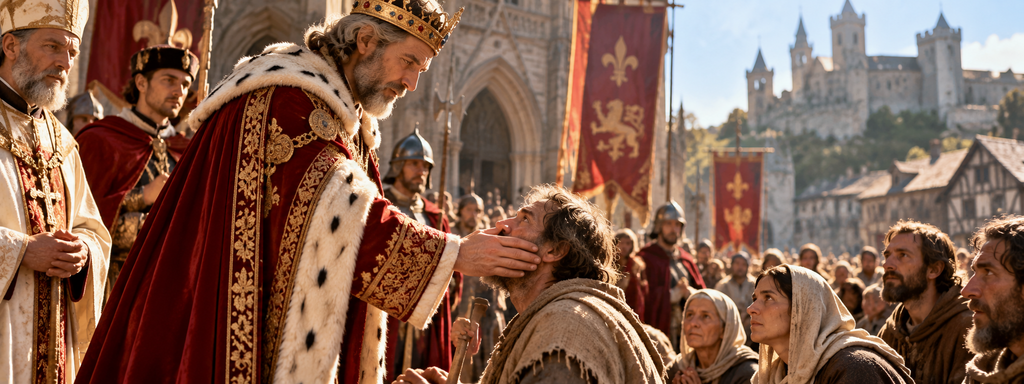
The belief in the therapeutic power of the hands survived strongly during the Middle Ages in Western Europe, although it took on a very particular form linked to political and divine power. In France and England, it was firmly believed that legitimate monarchs possessed a sacred gift of healing simply because they had been anointed.
This phenomenon, widely documented by royal chroniclers from the reign of Robert II the Pious in France and Edward the Confessor in England, brought thousands of people suffering from scrofula (a common lymphatic condition at the time) together in public squares. The king walked among the crowd, gently touching the faces and necks of those affected while reciting prayers. This practice, far from being an isolated myth, remained alive and active well into the 18th century with the arrival of the Enlightenment.
Conclusion: The Common Thread of Humanity
What Reiki did wonderfully in the 20th century was to structure and democratize knowledge that already belonged to the heritage of humanity, allowing anyone to access it without having to be a pharaoh, a king, or a saint.
Looking to the past does not diminish the value of modern techniques; on the contrary, it enriches them. It reminds us that healing through the hands is not a passing trend nor a geographical exclusivity: it is a universal truth engraved in the DNA of our species since the beginning of time.
About the Author
Alfredo Aguilera Saldaña
Alfredo Aguilera Saldaña is an administrator and retired academic from the University of Guanajuato, Mexico. He currently works as a seeker, writer, and teacher in systems of personal evolution and energetic healing.
Over the last decades, he has devoted his career to the creation of healing methodologies and to the development of a philosophical and existential literary narrative. His experience brings together education, Reiki, energetic practices, research, and literature in an ongoing quest to understand the human being.