
When Motherhood Transformed My View of Education
AI have 15 years of experience teaching in Early Childhood Education and Higher Education. But it was atypical motherhood that completely transformed the way I look at learning and helped me grow significantly as an educator.
It was through this experience that I began to see learning differently—not only from what we study, but also from what we experience every day. Atypical motherhood placed me in situations and challenges that I had to learn to understand through real-life experience.
The diagnosis, the mistakes, the successes, the doubts, and everything I had to experience in the reality of atypical motherhood became part of this journey. This challenge led me to seek a deeper understanding of atypical behavior and how to approach the diversity found across different neurodevelopmental conditions.
I went looking for answers.
And also for support.
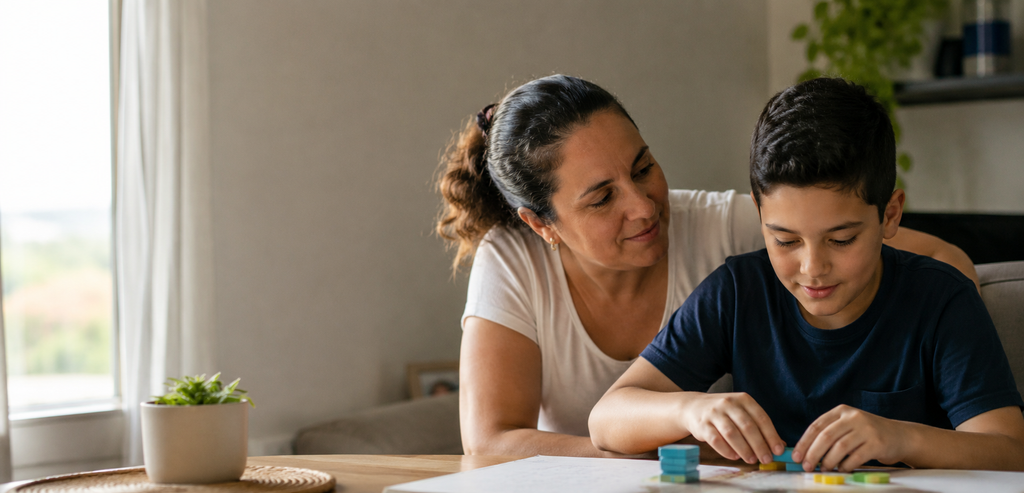
Learning to Understand
Along this journey, I sought training and knowledge that could give me more tools to understand behaviors and deal with challenging situations related to Autism Spectrum Disorder.
Among the training I completed are:
- School Inclusion — Guiding Conduct, a course with Professor Facion, psychologist, postdoctoral researcher and specialist in Autism Spectrum Disorder behavior.
- Naturalistic ABA and Parent Training Techniques, a course with neuropsychologist Mayra Gaiato.
- IEP and Special Education Laws, training on the Individualized Education Plan, with psychopedagogue Talita Pazeto.
- School Adaptation — IEP and Specialized Educational Support, a course with psychopedagogue Priscila Bacile, focusing on school adaptation, Individualized Education Plans and specialized educational support.
But studying did not mean finding a ready-made formula. It meant learning to observe, learning to try, and understanding that what works in one situation may not work in another. And that, many times, it is necessary to change direction.
“The secret is precisely learning to change direction without losing your way.”
— Gracietti Santana de Oliveira
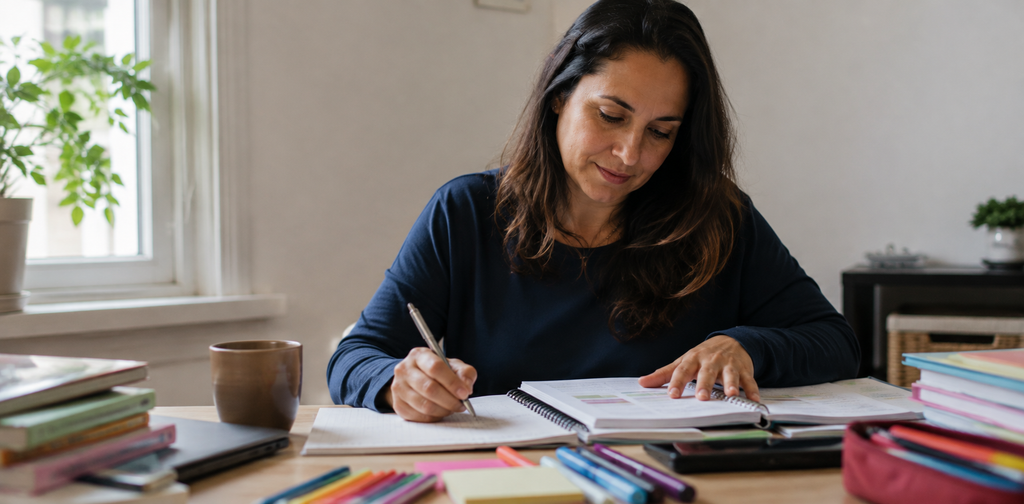
The Reality of Atypical Motherhood
I have two neurotypical children and two autistic sons. One of them is already a teenager, 15 years old, autistic with Level 1 support needs and ADHD. The other is autistic with Level 3 support needs, non-speaking and, at the age of 10, was still using diapers.
This reality led me to continuously study behavioral strategies and adaptations for everyday activities—the so-called Activities of Daily Living, or ADLs, as they are known in therapeutic settings.
These are activities that are part of everyday life and can represent significant challenges for some people. Through these experiences, I came to understand even more deeply that development does not always happen quickly or visibly. Sometimes, what may seem small to someone looking from the outside represents a major achievement for a family.
Everything can be very subtle.
And that is precisely why we need to learn how to observe.
Without Romanticizing Autism
I want to show families and teachers that it is possible to approach autism without romanticizing it, without derogatory language and without ableism—while recognizing the weight of daily routines and the difficult days, but also showing that, with daily practice and the right tools, life can become more manageable and progress can happen.
Not always quickly.
Not always in the way we imagine.
But gradually and with persistence.
Motherhood is not simple. There is no instruction manual for any family, whether neurotypical or atypical. But there are many forms of exchange and support that can help ease the weight of everyday challenges.

After the Diagnosis
Through this work, I want to show families and teachers that it is possible to have hope and to support their sons, daughters and students after a diagnosis.
But with realism.
Without the idea that if you simply do this or that, everything will magically get better. That is not how it works, because we are all different. Every child is different, and every family has its own reality and circumstances.
There are therefore many different ways to seek support, and they need to take each family’s possibilities into account. With good guidance and careful observation, we can learn different ways of approaching diversity.
It is not magic.
And we will not get everything right the first time.
Perhaps the secret is precisely learning to change direction without losing your way.
A Journey That Continues
This is only the beginning of a journey that continues every day. A journey built through study, experience, mistakes, successes, observation and learning.
I want to share here what I have learned and what I am still learning. I want to open a conversation with families and teachers about autism, neurodiversity, inclusion, behavior, learning and the small achievements that are part of everyday life.
Let us move forward together.
Let us not give up on making the world a more inclusive and better place for everyone who needs additional support and assistance.
With love, patience and the right tools, learning is always possible.
It is only the beginning.
— Gracietti Santana de Oliveira
About the Author
Graciete Santana de Oliveira is a teacher and educator, graduated in Foreign Trade from Universidade Paulista — UNIP and holds a postgraduate degree in New Technologies for Education. She has 15 years of teaching experience, working in Early Childhood Education and Higher Education.
Through her experience of atypical motherhood, she deepened her training in inclusive education, autism, neurodiversity, behavior, Individualized Education Plans, specialized educational support and strategies to support families and schools.
At Mundo Reiki, she shares experiences and knowledge about inclusive education, learning, neurodiversity and the everyday challenges faced by families and educators.
Continue Your Journey with Mundo Reiki
An international library dedicated to Reiki, holistic care, and human development.