
Childhood That Needs Time to Exist
By an educator who learned to observe what a child says — and also what they are not yet able to say.
Looking Beyond What Appears
Throughout my experience as an early childhood educator, I have learned that observing a child is much more than following their performance, learning, or behavior.
It means learning to look beyond what appears.
A child cannot always say that they are tired, frustrated, sad, anxious, or overwhelmed. Many times, they communicate through their body, silence, restlessness, play, drawing, music, or a sudden change in behavior.
And that is precisely why, in recent years, one question has increasingly caught my attention: how are we shaping childhood emotionally in a world that is becoming more and more connected to screens?
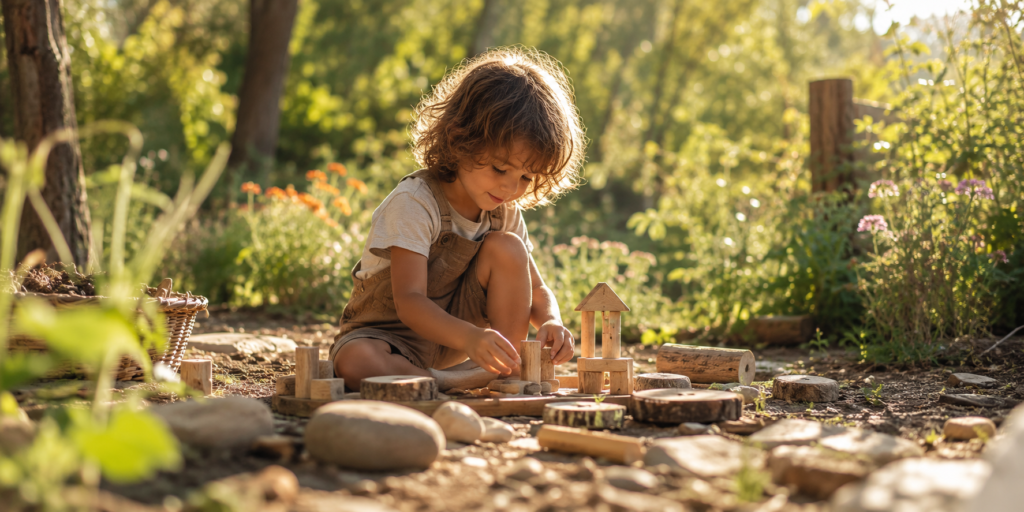
Childhood Needs Space to Play
I do not believe in a childhood without technology.
Technology is part of life and can teach, entertain, bring people closer, and expand possibilities.
My concern begins when I notice that screens start occupying spaces that once belonged to play, conversation, movement, creativity, nature, and rest.
Because children need to play.
They need to invent.
They need to experiment.
They need to move.
They need to get bored.
They need to create stories that are not already waiting for them on a screen.
In play, children also speak.
A child can turn a cardboard box into a house. A piece of wood can become a sword. Dolls can be put to sleep. A child can create monsters, heroes, families, and entire worlds.
And many times, what they cannot yet explain finds a way to exist through play.
When Children Express Before They Can Speak
It was as an educator that I learned to value this language.
Children often express themselves before they are able to put their feelings into words.
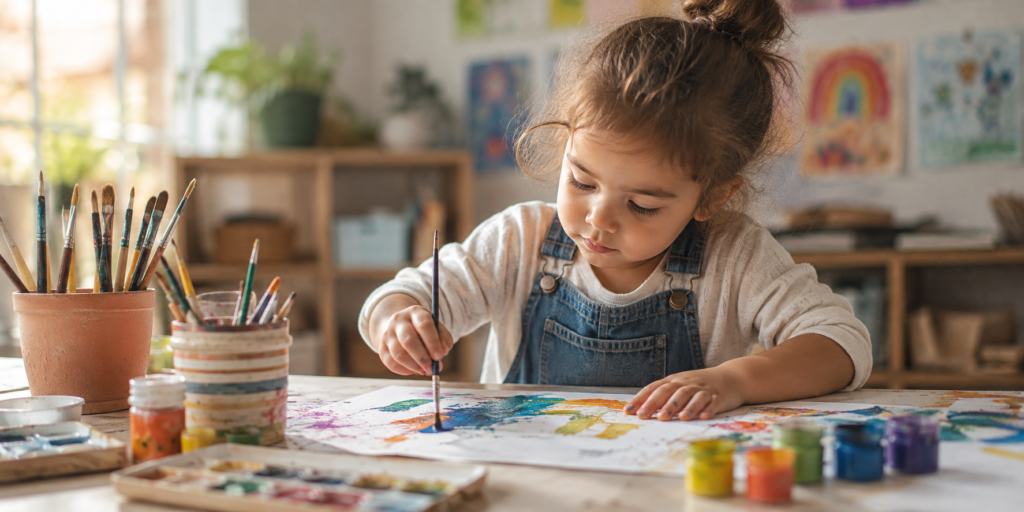
They may not know how to say, “I am frustrated,” but they may draw.
They may not know how to explain a fear, but they may create a character.
They may not be able to talk about what they are feeling, but they may sing, dance, play, or simply change their behavior.
Other Possibilities for Expression and Care
It was from this perspective that I also began to take an interest in integrative therapies and in different possibilities for children’s expression.
Not as magical solutions, and certainly not as substitutes for psychology, medicine, or other professional support when needed.
Rather, as complementary resources that can broaden the possibilities of care.
Music, for example, can be an emotional language. Music therapy, when practiced by a qualified professional, uses musical elements within a structured therapeutic process.
Art can also open paths.
In art therapy, drawing, painting, modeling, and creating can offer children possibilities for expression that do not always depend on verbal language.
There is also play, stories, movement, contact with nature, and body-based practices appropriate for childhood.
Before We Teach Control, We Need to Teach Recognition
All of this makes me think that perhaps we should not simply teach children to control their emotions.
We need to help them recognize them.
“This is anger.”
“This is fear.”
“This is sadness.”
“This is frustration.”
And, little by little, help them discover ways to move through what they are feeling.
Time to Slow Down
Another aspect I consider essential is sleep.
I have observed how contemporary routines can make it difficult to slow down.
Children spend the day receiving stimuli and, when night comes, they often remain in front of videos, games, or cartoons.
But the body needs to learn that there is a time to stop.
A story before bedtime.
Quiet music.
A conversation.
A hug.
A quieter environment.
Small rituals that help signal that the day has come to an end.
When the Screen Is Turned Off
For this reason, when I think about excessive screen use, I do not think only about the device.
I think about what is being replaced.
How much time does the child have to play?
How much time to talk?
How much time to move?
How much time to imagine?
How much time to simply do nothing?
And how much time to sleep?
Perhaps this is an even more important question than counting the hours spent in front of a screen.
What are we offering children when the screen is turned off?
We Need to Give It Back
Because removing is not enough.
We need to give it back.
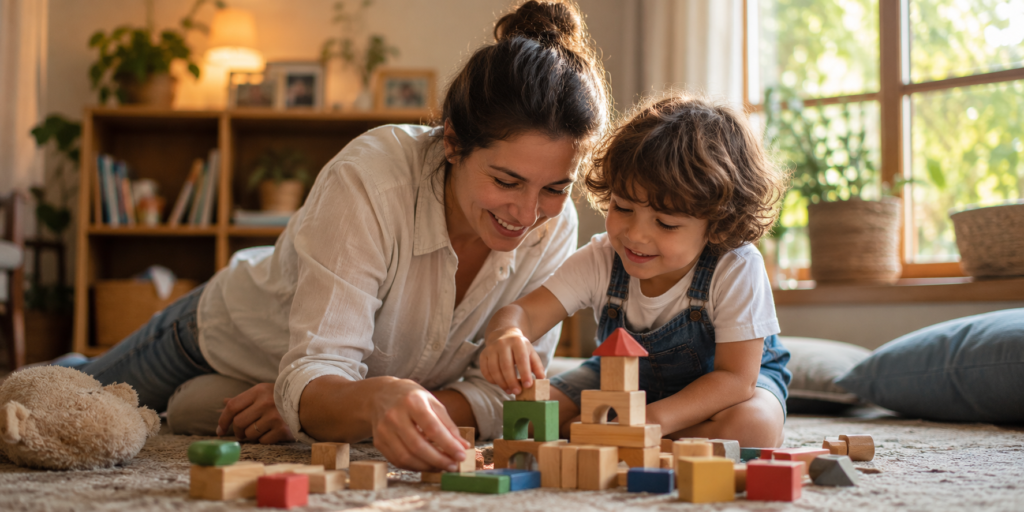
Give back play.
Give back presence.
Give back creativity.
Give back connection with the body.
Give back nature.
Give back stories.
Give back silence.
Give back time.
The Presence of Adults
As an educator, I do not believe in a perfect childhood.
I believe in a childhood that is sufficiently supported and welcomed so that children can learn, make mistakes, play, feel, create, and try again.
And I also believe that adults need to be present in this process.
Not only physically.
Truly present.
Sit on the floor.
Listen to a story that seems to have no end.
Ask how their day was.
Look into their eyes.
Notice when seemingly difficult behavior is trying to communicate something.
Perhaps We Need to Ask Different Questions
Perhaps caring for childhood means learning to ask these questions.
Not only:
“What is this child doing?”
But:
“What are they feeling?”
Not only:
“How do I make them stop?”
But:
“What are they trying to tell me?”
And not only:
“How much time do they spend in front of a screen?”
But:
“How much time do they have to live outside of it?”
A Childhood With Time to Exist
Childhood does not need a life without technology.
It needs balance.
It needs boundaries.
It needs sleep.
It needs movement.
It needs connection.
It needs art.
It needs music.
It needs stories.
It needs nature.
It needs play.
And, above all, it needs adults who understand that childhood is not simply preparation for the future.
Childhood is a child’s present.
And it passes quickly.
Perhaps, then, one of the most beautiful ways to care is to give children back what an accelerated world has been taking away:
time to play, time to feel, time to imagine, time to rest, and time to simply exist.
About the Author
Vanessa Lima Nunes is a pedagogue, literacy educator, specialist in Childhood Cultures, and neuropsychopedagogue. She works in education and dedicates her work to observing and understanding the different processes of learning and development in childhood.
She is also a Radiesthetic Tables therapist, reader, curious learner, and researcher of integrative therapies. Her experience as an educator informs a style of writing marked by observations of everyday life, reflections on childhood, and an interest in understanding different forms of expression, learning, and care.
As a contributor to the Mundo Reiki Library, Vanessa shares her experiences and reflections on childhood, education, presence, and integral care.
📍 Pelotas – Rio Grande do Sul, Brazil
Continue Your Journey with Mundo Reiki
An international library dedicated to Reiki, holistic care, and human development.