Reiki Initiation: Between Tradition and New Paths of Teaching
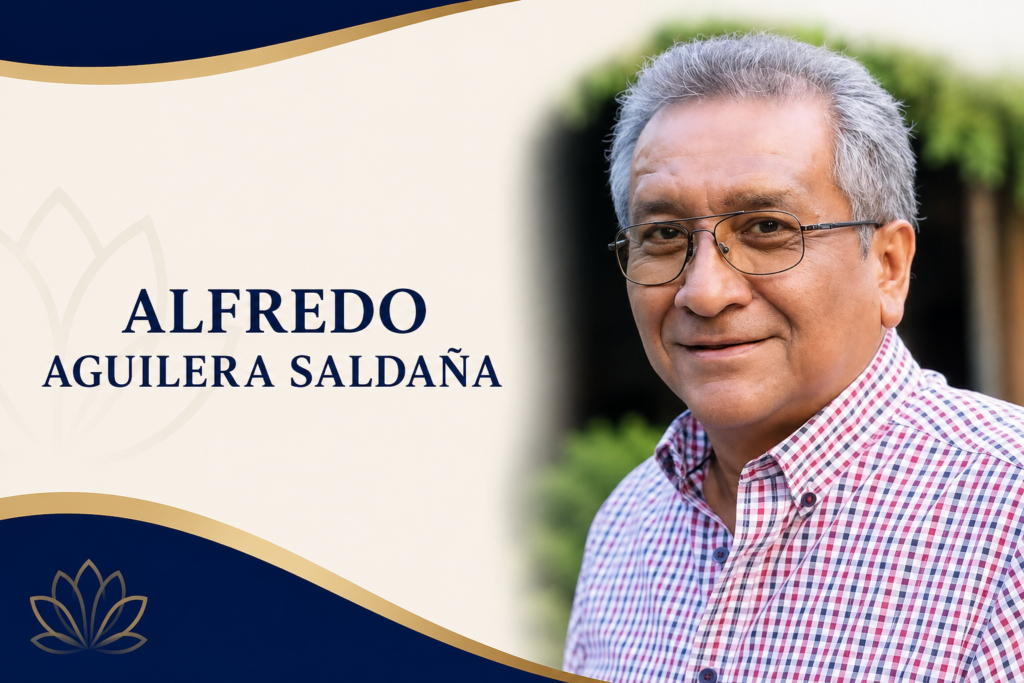
“Reiki is the healing technique, while the novel is the narrative vehicle through which that healing reaches the soul through writing.”
A Study on Reiki Initiation
Reiki has gone through different periods of expansion and transformation throughout its history. As knowledge has spread and new schools, techniques, and forms of teaching have emerged, questions have also arisen about how this knowledge should be transmitted and, particularly, about the meaning of initiation.
It is within this context that Alfredo Aguilera Saldaña presents an exploratory investigation focused on observing the differences and possible similarities between Reiki initiations carried out in person and those carried out remotely.
The study is presented as an exploratory, objective, and non-conclusive investigation, focused on comparing in-person and remote initiations through data obtained using a biofeedback system.
From the outset, the author raises an important concern: in an age marked by an enormous amount of available information, not everything that circulates as knowledge necessarily has the same level of foundation.
The expansion of online systems has broken physical barriers and allowed information, ideas, and experiences to circulate rapidly. At the same time, this accessibility has created the challenge of documenting, organizing, and analyzing what is produced.
For Alfredo, documentation is a way of transmitting knowledge, recording ideas, and providing an account of events, while also contributing to processes of education and research.
Reiki and a New Century
Over approximately one hundred years of development and dissemination, Reiki has moved beyond its original context and is now practiced in different countries and cultures.
During this process, new schools, techniques, and systems developed from the traditional method have emerged.
The study itself recognizes that many of these practices have value, importance, and innovative development within the cultural and social contexts in which they were created, much as Mikao Usui’s own Reiki developed within his particular context.
Within this context, the study recalls a reflection by Reiki Master Paulo Andrade, known as “Rishilingam,” following his participation in the international meeting marking the centenary of Usui Reiki Ryoho, held on April 7, 8, and 9, 2023, at the Central Public Hall in Osaka, Japan.
At that meeting, which recognized the legacy of Mikao Usui and proposed working toward a new century of Reiki, Paulo Andrade stated:
“The first 100 years of Reiki popularized its teaching; in the next 100 years we must systematize it.”
This statement helps to understand the perspective from which Alfredo’s research is developed.
The one hundred years of Reiki practice are considered only a beginning of what still needs to be developed in the future. During this period, techniques and systems have been created from the traditional method, many of them with their own value and importance within particular cultural and social contexts.
From this perspective, systematizing Reiki knowledge means organizing and reconstructing experiences in an attempt to understand the logic of the processes experienced, the factors involved, and the way those factors have related to one another.
Systematizing Without Closing the Knowledge
There are different positions regarding the teaching and the necessary systematization of Reiki knowledge.
The study itself points out that these positions range from those who consider Reiki to require no explanation to approaches described as highly quantum-oriented, but without sufficient theoretical, conceptual, and methodological support. There are also positions associated with economic interests, personal recognition, or different interpretations among those who teach and practice Reiki.
In this context, carrying out exploratory research is not an easy task.
Alfredo acknowledges that the conclusions of a study of this nature may receive considerable criticism. Nevertheless, the research is undertaken with the purpose of becoming a formal reference for future investigations that may contribute to the development of technical, conceptual, and methodological knowledge appropriate to this new century of Reiki.
The intention, therefore, is not to establish a definitive truth.
It is to observe, document, and open a path for further research.
The Alianza Reiki de México and Research
The investigation is also connected to the work of the Alianza Reiki de México A.C.
According to the document, the organization includes among its objectives the documentation and recognition of research conducted by the association itself, by the Centro de Estudios de Apoyo Alternativo Numu — CEAAN — and by people connected with the organization.
This concern with research did not begin with the study of initiations.
The document presents as an earlier reference a study conducted in May 2011 in Irapuato, Guanajuato, on the application of complementary Reiki Sistema CEAAN® therapy to people with musculoskeletal problems.
The study sought to observe, among other aspects, a reduction in pain intensity. The results were later presented at nursing-related events and published in the book Reiki Puntural Sistema Reiki CEAAN, by Alfredo Aguilera Saldaña.
That earlier experience forms part of the context from which this new investigation developed.
The Question of Initiation
It is within this context of documentation and research that the central question of the study emerges.
Throughout the development of Reiki, different schools have presented different forms of initiation.
In general terms, the study identifies two main positions.
On one side are practitioners and teachers associated with traditional schools, who defend in-person initiation and transmission carried out within a particular tradition.
On the other are teachers and schools that consider it possible to conduct initiations remotely, in response to new forms of communication and new interpretations of Reiki transmission.
This difference in perspectives raises questions that are not simple.
If Reiki can be sent remotely, would it also be possible to carry out an initiation remotely?
And, considering the reflections presented in the study concerning Mikao Usui’s path, would it be possible for a person to initiate themselves or to receive an initiation remotely?
These questions form part of the problem statement that gives rise to the investigation.
They are not presented as questions with predetermined answers.
They are precisely the questions that set the research in motion.
Initiation Is Not Simply Information
To understand this issue, Alfredo also draws upon the concept of initiation found in different traditions.
The study presents initiation as a rite of passage and transformation, through which a person moves from one condition to another within a particular path of knowledge.
In Reiki, initiation is presented as part of a tradition of transmission between teacher and student.
It would therefore not be merely the transmission of information about a technique.
From the traditional perspective presented in the study, there is a dimension of experience, transformation, and continuity of transmission.
It is precisely this distinction that makes the debate more complex.
Receiving a Reiki session is not necessarily the same as undergoing an initiation.
Learning information about Reiki is also not necessarily the same as participating in an initiatory process.
The study seeks precisely to investigate this distinction.
Tradition and Transformation
When addressing initiatory traditions, the study refers to authors such as René Guénon and Serge Raynaud de la Ferrière.
Based on these references, initiation is presented as something that goes beyond purely theoretical knowledge.
Initiatory knowledge would be related to the transformation of the person who receives it and to the transmission of a particular spiritual influence through rites.
This perspective helps explain why comparing in-person and remote initiations cannot be reduced simply to a technological question.
The question is not merely:
“Is it possible to transmit Reiki remotely?”
The broader question is:
“Can an initiation, understood as a process of transmission, transformation, and continuity of a tradition, take place remotely?”
This is the question that the research seeks to observe.
The Objective of the Research
Based on this framework, Alfredo establishes a specific objective for the study.
The research seeks to identify possible analogies between biofeedback data related to the energetic states of people undergoing in-person and remote initiations.
The intention is to determine whether these observations may contribute to the development of paths of integration, methodologies, and philosophical reflections capable of bringing together the different positions that exist on the subject.
The study itself states that, at this initial stage, it does not intend to offer rigorous results in the sense of “hard” research, nor to influence the thinking of practitioners of any Reiki system, technique, or form. Its purpose is to seek objective determinations beyond simple descriptions, beliefs, or definitions.
For this reason, the work should be understood as an exploratory investigation, whose purpose is to study the two forms of the Reiki initiation ritual: in-person and remote.

A Research Project That Opens New Paths
Perhaps it is precisely this characteristic that makes the work interesting for a library dedicated to Reiki.
Alfredo Aguilera Saldaña does not present merely an opinion about initiation.
He records an attempt to investigate a question that generates different positions among schools and practitioners.
Through an exploratory methodology, the recording of participants, the description of procedures, and the search for data that can be compared, the study seeks to transform a discussion traditionally based on experiences and opinions into a subject that can be observed and discussed.
This does not mean that the question has been resolved.
It means that a question has been raised and that a path of investigation has begun.
What Comes Next
Alfredo’s research begins with a question that accompanies contemporary Reiki:
In person or remotely?
The answer will not be presented here.
Before examining the data produced by the study, it is necessary to better understand the two positions at the center of this discussion.
On one side, tradition and in-person transmission.
On the other, the new possibilities of remote transmission.
This is where we will continue in the next part of this series:
In-Person or Remote Initiation?
The Debate Within Reiki
About the Author
Alfredo Aguilera Saldaña is an administrator and retired academic from the University of Guanajuato, Mexico. He is President of Alianza Reiki de México A.C., founder and former Secretary of the Federación Iberoamericana de Reiki A.C., and founder of the Reiki CEAAN System.
His training includes Traditional Reiki (Takata), Karuna Reiki, Okuna/Atrante Reiki, and Reiki CEAAN, as well as multiple energetic and natural techniques. His trajectory brings together Reiki, education, research, human development, and literature.
As a writer and novelist, he is dedicated to allegorical literature and self-exploration, using narrative to address human duality and the awakening of consciousness.
His works include Lyara y los Reinos Invisibles, El sendero de los portales invisibles, El Arquitecto del Silencio, and Dialogo con la piedra.
Editorial Note
Part 1 of 4 — This article is part of a complete research document on Reiki initiation.
This article was prepared from the work of Alfredo Aguilera Saldaña, La Iniciación de Reiki desde una perspectiva de investigación exploratoria objetiva no concluyente con Biorretroalimentador multimedia.
The study itself is presented as an exploratory and non-conclusive investigation, conceived as a first approach to the subject and as a starting point for future research. Therefore, Mundo Reiki presents here the author’s observations, approaches, and proposals while respecting the original meaning and perspective of his research, without turning his observations into definitive scientific conclusions.