What is Reiki?
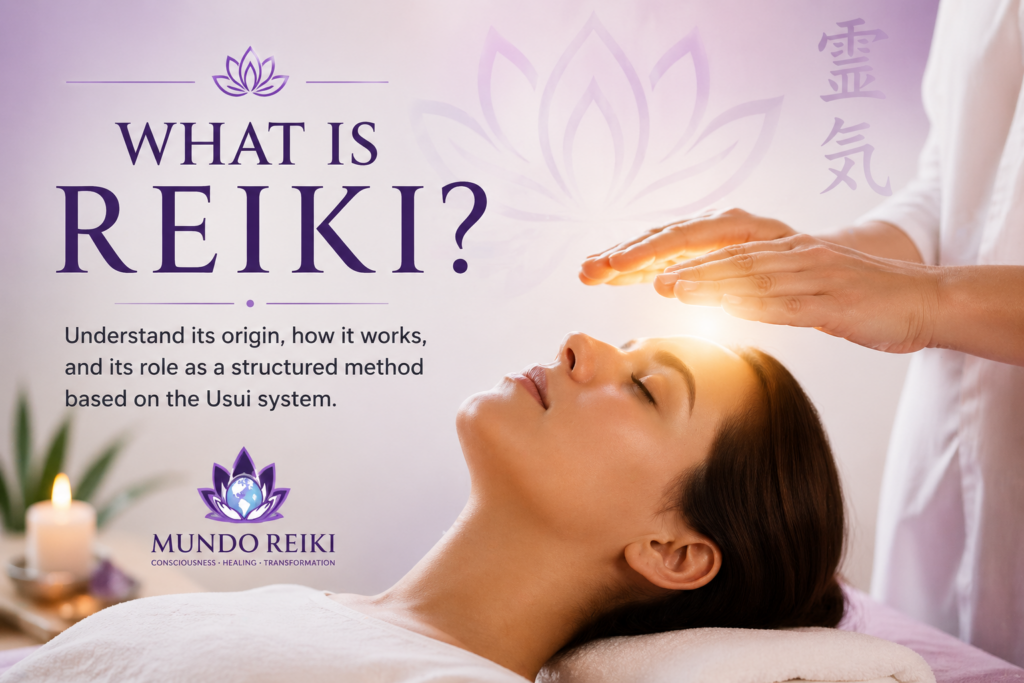
Reiki is a therapeutic practice of Japanese origin that uses hand placement to promote energetic balance, physical well-being, and emotional harmony.
It can be applied to people, environments, and even at a distance, and is recognized as an integrative practice in various contexts.
Origin of the Usui System
Reiki originated in Japan with Mikao Usui (1865–1926), who structured a system based on ethical principles, personal discipline, and energy application.
The method was later organized and expanded by two key figures:
- Chujiro Hayashi, who structured the clinical practice
- Hawayo Takata, who introduced Reiki to the West
Over time, Reiki spread worldwide and became part of complementary and integrative practices.
How Reiki Works
In traditional practice, Reiki is applied through the positioning of the hands on or near the body.
During a session, the practitioner acts as a channel, directing attention and intention to support the balance of the individual’s energy system.
This practice may contribute to:
- deep relaxation
- stress reduction
- emotional balance
- support for self-care processes
However, within the Usui System, Reiki is not limited to treating others.
Self-treatment is considered a fundamental part of the practitioner’s development.
Reiki Levels
Reiki teaching is usually structured into progressive levels of learning.
This structure is not meant to create spiritual hierarchy, but to organize maturity, responsibility, and depth of practice.
Level I — Awakening
The first level introduces the foundations of the practice.
Focus includes:
- self-treatment
- hand positions
- energy awareness
- in-person application
Level II — Transformation
The second level expands the possibilities of practice.
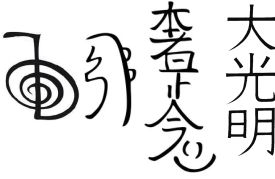
Here, traditional symbols are introduced:
- Cho Ku Rei
- Sei He Ki
- Hon Sha Ze Sho Nen
These function as tools for organizing intention and focus.
Level III — Realization
A stage of deeper internal development.
Includes the symbol:
- Dai Ko Myo (Great Bright Light)
This level emphasizes integration and personal growth.
Level IV — Mastery
In many Western schools, mastery includes:
- practitioner master
- teacher master
At this stage, the practitioner becomes responsible for:
- teaching
- initiating students
- preserving the method
Reiki is a Method, Not a Performance
With the popularization of Reiki, superficial interpretations have emerged.
However, in the original Usui System, Reiki is grounded in:
- discipline
- consistent practice
- personal responsibility
- emotional maturity
Frequently Asked Questions
Is Reiki a religion?
No. Reiki is not linked to any specific religion.
Can anyone learn Reiki?
Yes. Anyone can learn Reiki.
Does Reiki replace medical treatment?
No. Reiki is a complementary practice.
About the Author
Ruy Fernando Morelli is a Reiki Master and founder of Mundo Reiki.
He is dedicated to the structured study of the Usui System, integrating method, awareness, and depth into practice.
Special Series — The Origins of Reiki
Mikao Usui, Mount Kurama, Gokai, Gakkai and the expansion of Reiki to the West.
Mikao Usui and the Meiji Era ⛰️ Article 2
Mount Kurama Awakening ☸️ Article 3
Reiki Principles (Gokai) 🌏 Article 4
Gakkai and Expansion 🌉 Article 5
Hayashi and Takata
🌎 Explore this series in other languages