Tok Sen: Awakening the Energy Lines Through Thai Tradition
By Màrcia Lópes

Tok Sen is a traditional Thai technique that, according to its traditional accounts, dates back more than 2,500 years. After so many centuries, it continues to be practiced in different regions of Thailand, both in traditional communities and urban centers.
The word “Tok” is associated with the act of striking, while “Sen” refers to lines or pathways of the body within the traditional Thai understanding.
Tok Sen uses wooden instruments to produce stimuli, sounds, and vibrations over specific areas of the body. Within this tradition, the practice is associated with the Sen lines and with the circulation of Lom, traditionally associated with wind and the movement of energy through the body.

What does Tok Sen mean?
Tok Sen can be understood as a practice intended to “awaken the lines.”
During the application, the practitioner uses specific wooden instruments, performing rhythmic movements over selected areas of the body. The sound produced by the mallet and striker is part of the experience of the technique itself.
From the traditional perspective, these stimuli are intended to support the balance and free flow of the Sen lines, contributing to a feeling of relaxation and well-being.
The practice brings together different elements: physical contact, sound, vibration, rhythm, and the presence of the practitioner.
What is the origin of Tok Sen?
Tok Sen originated in northern Thailand, where it is connected to local traditions of care and to Thai traditional medicine practices.
Considered a traditional healing art, its knowledge has been passed down through generations.
Learning about Tok Sen also means getting to know part of the culture and traditional understanding of care associated with this practice.
The Sen Lines
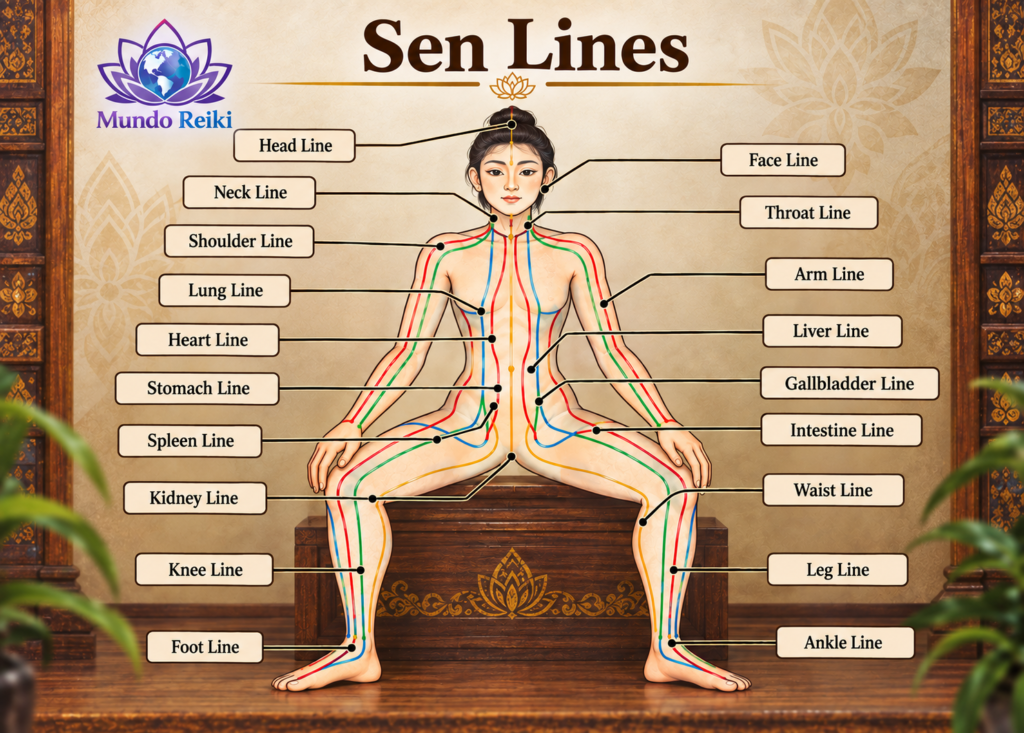
Within Thai tradition, the Sen Lines are understood as pathways through which vital energy circulates.
There are ten principal energy lines associated with the circulation of Lom, traditionally connected with wind and movement.
The representation of the Sen Lines helps illustrate the energetic framework in which Tok Sen is traditionally understood.
How does Tok Sen work?
Within the traditional perspective, Tok Sen seeks to “awaken the lines,” supporting the free flow of energy through the body.
The stimuli are produced using wooden mallets and strikers. The vibrations created by contact between the instruments and the body are perceived as part of the application experience.
Sound, pressure, rhythm, and the length of time spent on each area are important elements of the practice.
The practitioner’s concentration and presence are also part of the process.
According to the traditional understanding, the Sen lines are associated with different areas of the body, including muscles, tendons, nerves, and blood vessels.
These explanations belong to the traditional and energetic framework associated with Tok Sen and should not be understood as a substitute for evaluation or treatment by qualified healthcare professionals when needed.
The instruments used in Tok Sen
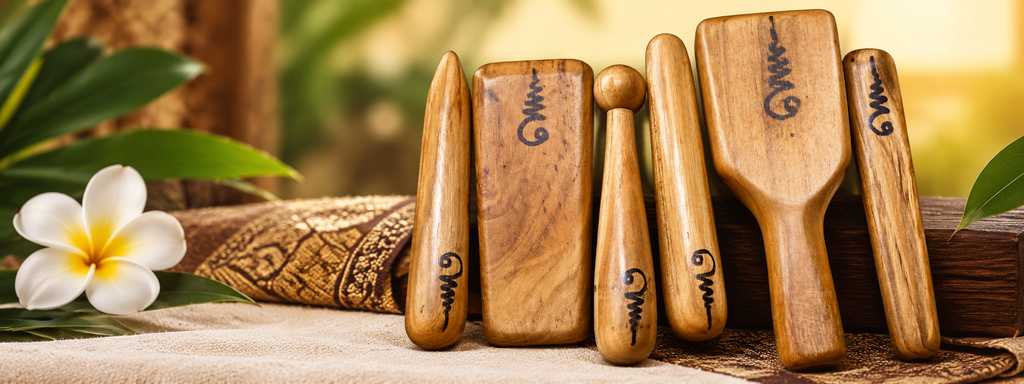
The instruments used in Tok Sen are traditionally made of wood and come in different shapes.
Mallets, strikers, and other pieces may be used according to the area being worked on and the practitioner’s approach.
Each instrument has its own characteristics of size, shape, and surface, allowing different forms of stimulation.
The collection of tools is also part of the cultural identity of the practice.
Sound and vibration
One of the most distinctive elements of Tok Sen is sound.
The impact of the mallet on the wooden instrument produces a characteristic vibration, creating a rhythm that accompanies the application.
Sound, contact, and vibration come together during the practice, creating a distinctive bodily experience.
For many people, this experience may be associated with relaxation and a more conscious awareness of the body.
Who is Tok Sen for?
Because of its traditionally gentle and non-invasive nature, Tok Sen is used with different groups, including adults and older people and, in some approaches, children, babies, and animals.
The way the technique is applied should always take into account the individual characteristics of the person receiving it.
In specific situations, particularly involving children, babies, older adults, pregnant people, individuals with health conditions, or animals, the procedure should be performed by a qualified practitioner while respecting guidance from the professionals responsible for their care.
Tok Sen and the chakras
Within some integrative approaches, Tok Sen is also associated with the chakras and with an energetic and vibrational understanding of the body.
From this perspective, the work is not necessarily limited to physical contact. Sound, vibration, and therapeutic intention may form part of an energetic experience.
This understanding belongs to the field of integrative practices and energetic traditions that dialogue with different approaches to care.
An experience of presence
More than a technique involving wooden instruments, Tok Sen brings together sound, vibration, rhythm, contact, and presence.
The sound produced by the instruments establishes its own rhythm.
The vibration can be perceived throughout the body.
The practitioner’s attention accompanies the entire process.
Within the traditional perspective, this combination is intended to support balance along the Sen lines and provide an experience of relaxation and well-being.
Learning about Tok Sen also means connecting with a tradition of care that has been passed down through generations and remains present in Thai culture.
About the author
Màrcia Lópes is a physiotherapist, postgraduate in Acupuncture from FRASCE, and an integrative therapist with more than ten years of experience.
Her work focuses on holistic health care, bringing together different therapeutic practices to promote balance, quality of life, and well-being.
Throughout her career, she has specialized in approaches including Cupping Therapy, Acupuncture, Auriculotherapy, Reiki, Bach Flower Remedies, Yoga, and Tok Sen, developing individualized care centered on each person’s needs.
Meet the author in the Mundo Reiki Library:
Màrcia Lópes — Mundo Reiki Library