Reiki and the Colors of the Chakras
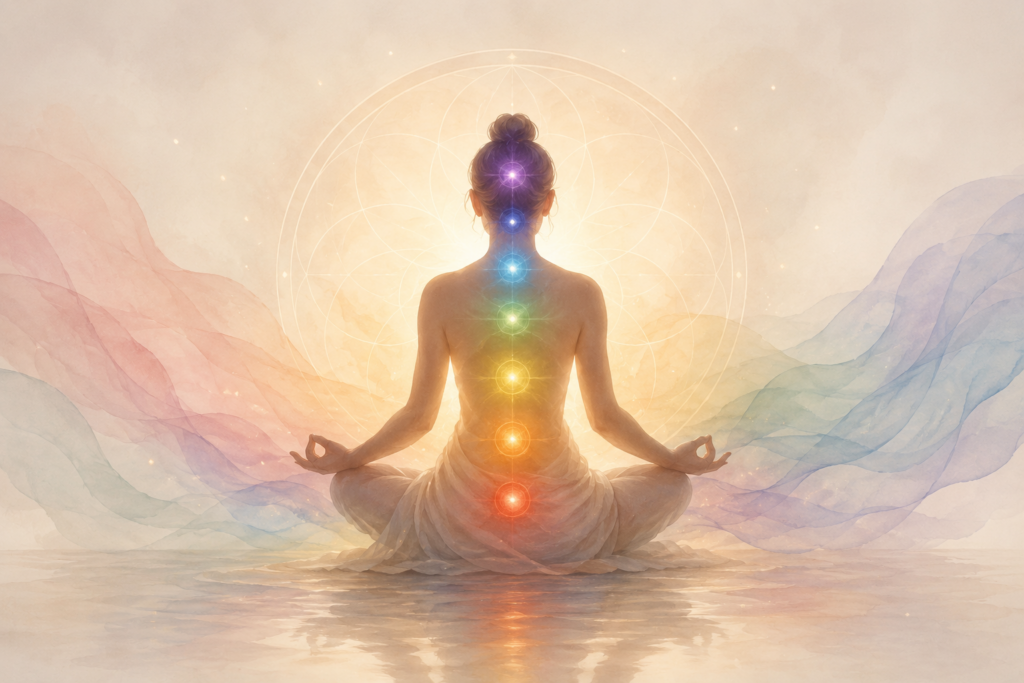
Reiki and Chromotherapy work together in a harmonious and profound way, as both focus on the human vital energy, promoting balance, well-being, and expanded awareness. These frequencies help support the care of different imbalances that we perceive throughout daily life.
A Reiki practitioner, when welcoming someone for a session, should listen carefully to the client’s experiences, observing where the imbalance appears and which aspects of the person require greater attention at that moment.
As a Reiki Master and Chromotherapy teacher, I notice every day how chakra colors can enhance energetic processes during sessions. Each chakra carries a specific vibrational frequency and is associated with a color that supports physical, emotional, mental, and spiritual alignment.
For those who are not yet familiar with the seven chakras, here are some correlations between the energy centers and their corresponding colors:
The root chakra, represented by the color red, strengthens our sense of safety and connection to life. The sacral chakra, associated with orange, awakens creativity and healthy emotions. The solar plexus chakra, yellow, supports self-esteem and personal power.
The heart chakra, green or pink, resonates with love and emotional healing. The throat chakra, light blue, encourages communication and expression. The third eye chakra, indigo, expands intuition and inner perception. Finally, the crown chakra, violet or white, connects us with spirituality and higher awareness.
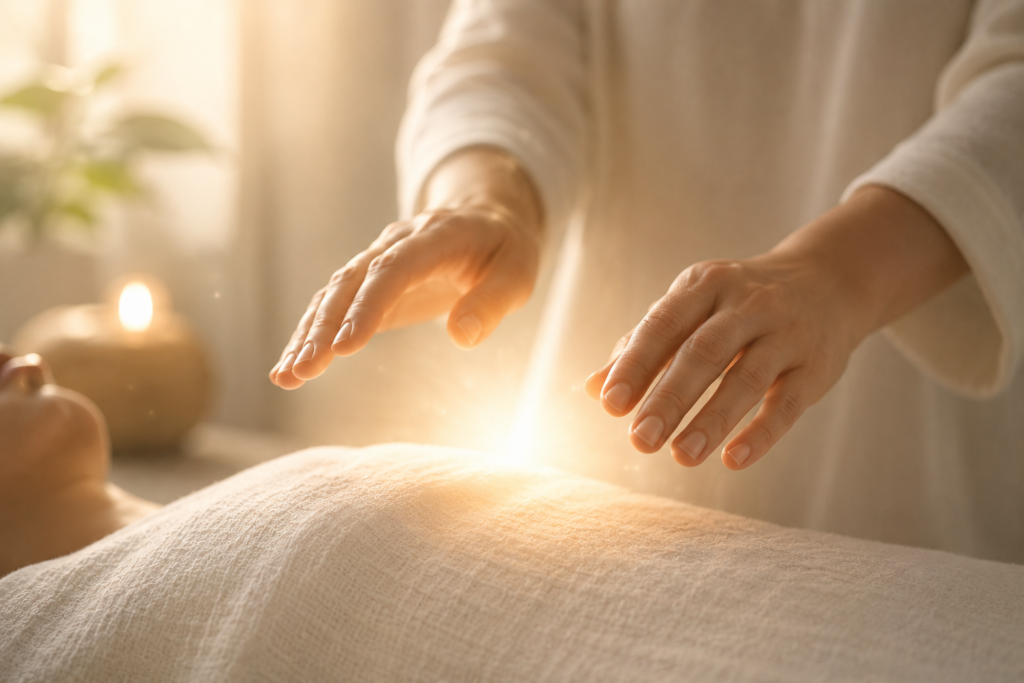
When Reiki and Chromotherapy are combined, they create an even deeper and more welcoming field of care. Reiki energy flows through the hands, while colors act as therapeutic frequencies that help harmonize the chakras and restore energetic balance.
These complementary practices promote relaxation, mental clarity, emotional strengthening, and expanded inner awareness, supporting each person in their process of self-knowledge and self-care.
During Reiki sessions, it is common for both practitioner and client to perceive colors or subtle sensations. These experiences may arise naturally, encouraging states of calmness, presence, and inner comfort.
In an increasingly accelerated and overstimulated world, integrative practices such as Reiki also invite us to slow down, breathe, and reconnect with our body, emotions, and inner rhythm.
Care begins when we return to presence.
I hope this contribution has been meaningful.
With love and gratitude,
Cecilia Farahte
About the author
Cecilia Farahte dedicates her work to integrative care and human development, seeking to understand the human being as a whole — body, mind, emotions, and energy.
With a background in Education and a postgraduate degree in Integrative Therapies, she has worked in the therapeutic field for more than 20 years, integrating technical knowledge, sensitivity, and spirituality into a practice grounded in balance, presence, and awareness.
She is a Reiki Master in the Traditional Mikao Usui System, facilitator of Family Constellations, integrative therapist, and teacher of Chromotherapy, Reiki, and Family Constellations in her therapeutic space in Santos, Brazil.
She also leads in-person Family Constellation groups, gives charitable talks focused on spirituality and mental health, and is currently deepening her studies in Psychoanalysis.
She is the creator of the Therapeutic Chromatic Cards, a self-awareness and therapeutic support tool.
📍 Santos – SP, Brazil
📷 Instagram: @ceciliafarahte
🌐 Official page on Mundo Reiki:
Cecilia Farahte on Mundo Reiki
📱 WhatsApp: +55 13 98187-2523
Special Series — The Origins of Reiki
Mikao Usui, Mount Kurama, Gokai, Gakkai and the expansion of Reiki to the West.
Mikao Usui and the Meiji Era ⛰️ Article 2
Mount Kurama Awakening ☸️ Article 3
Reiki Principles (Gokai) 🌏 Article 4
Gakkai and Expansion 🌉 Article 5
Hayashi and Takata
🌎 Explore this series in other languages