REIKI, AN ALLY OF CONVENTIONAL MEDICINE
An integral view of health, energy, and human well-being.
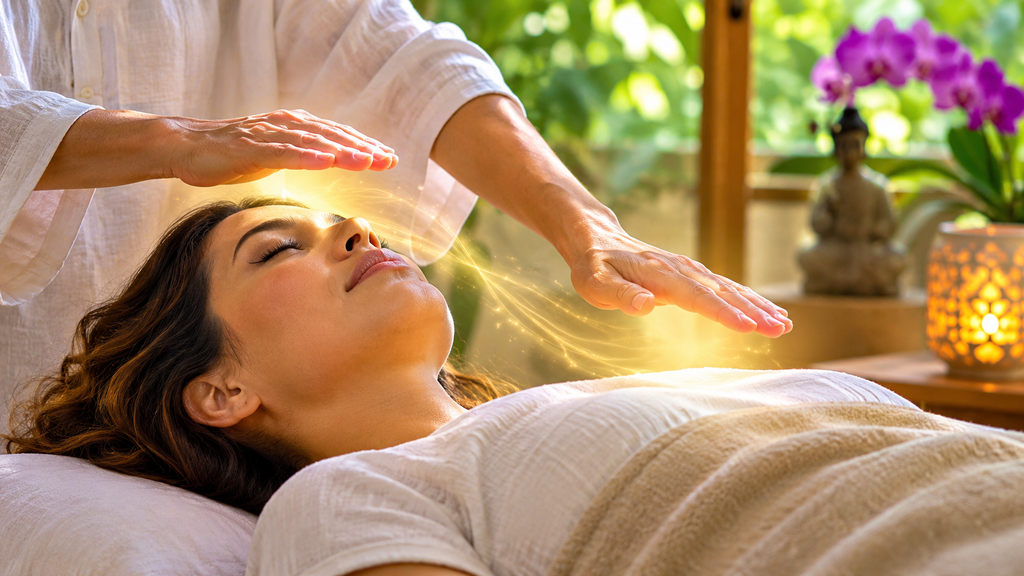
For a long time, conventional medicine and complementary therapies have been considered separate approaches to caring for human health. However, they do not necessarily have to follow separate paths. The possibility of integrating different knowledge and practices invites us to understand health from a broader perspective, in which physical, mental, emotional, and spiritual well-being takes on special importance.
Within this integrative vision, we find Reiki, a practice of Japanese origin that seeks to promote energetic balance, inner harmony, and personal well-being.
Its philosophy is based on a fundamental principle: the human being should not be considered merely as a physical body, but as a unified whole.
Reiki and vital energy
Reiki, systematized in the early twentieth century by Mikao Usui, has its roots in the Eastern concept of vital energy. Its name comes from two Japanese terms: Rei, related to the universal or spiritual, and Ki, which refers to vital energy.
According to this philosophy, energy flows through our bodies and is related to the balance between the body, mind, and emotions.
Some contemporary Reiki approaches work with chakras, considered energy centers, and the aura, understood as an energy field surrounding the human being and serving a protective function.
According to this traditional perspective, disruptions in the flow of energy may be associated with states of physical or emotional imbalance. Worries, stress, fears, losses, and difficult experiences are among the things that can affect our sense of inner harmony.
The Reiki practitioner or master acts as a channel for energy through the laying on of hands, gently placing them over specific areas of the body or holding them a short distance away, with the intention of promoting energetic balance and natural processes of well-being.
These concepts belong to the energetic and spiritual tradition of Reiki. Although its mechanism of action has not been scientifically demonstrated, they form the philosophical basis of its practice.
The human being as a whole
One of the most important qualities of Reiki is its holistic view of the individual.
We often pay attention to our bodies only when a physical discomfort appears, without stopping to observe what is happening within us, how we are experiencing our emotions, or how we are facing the circumstances of everyday life.
Prolonged stress, anxiety, worries, and emotional difficulties can affect our rest, concentration, personal relationships, and even our physical health.
This does not mean that all illnesses have an emotional or energetic origin, but it does remind us of the importance of addressing the different dimensions of human well-being.
From this perspective, Reiki offers a space for tranquility, introspection, and personal reconnection, where we can slow down the pace of our daily lives and pay attention to our own needs.
It is not merely about addressing an ailment, but about accompanying the person who is experiencing it.
Reiki within integrative medicine
In recent decades, complementary therapies have attracted the interest of researchers, healthcare professionals, and hospital institutions in different parts of the world.
The World Health Organization (WHO) recognizes the importance of studying traditional, complementary, and integrative medicine practices, promoting their responsible incorporation into healthcare systems based on criteria of safety, quality, and scientific evidence.
Its Global Traditional Medicine Strategy 2025–2034 reinforces the importance of person-centered care, as well as research and collaboration between different therapeutic approaches.
In this context, some hospital institutions have incorporated Reiki into their wellness and integrative medicine programs, particularly as a form of support during certain medical treatments.
One example is Memorial Sloan Kettering Cancer Center in the United States, an institution specializing in oncology that includes Reiki among its complementary resources.
This integration represents an opportunity to build bridges between conventional medicine and complementary practices, while always respecting the roles, scope, and limitations of each discipline.
Benefits and applications of Reiki
Reiki is practiced in an environment of tranquility and respect, with the aim of helping the person experience a sense of rest, safety, and well-being.
Among the possible benefits that have been investigated or that some people report after receiving a session are:
- Physical and mental relaxation.
- Release of accumulated tension.
- Reduced perception of stress and anxiety.
- A sense of peace and inner balance.
- Improved readiness for rest and sleep.
- Support during difficult emotional processes.
- Support in managing the perception of pain.
- A greater connection with oneself.
- A sense of well-being during prolonged medical treatments.
Its application has also been studied as a complementary approach for people living with chronic pain, arthritis, rheumatic diseases, and migraines, among other conditions.
Although some studies have shown favorable results for certain symptoms, the scientific evidence is still limited and does not allow its effectiveness to be established as a specific treatment for these diseases.
Its potential value should be understood in terms of support and the pursuit of a better quality of life.
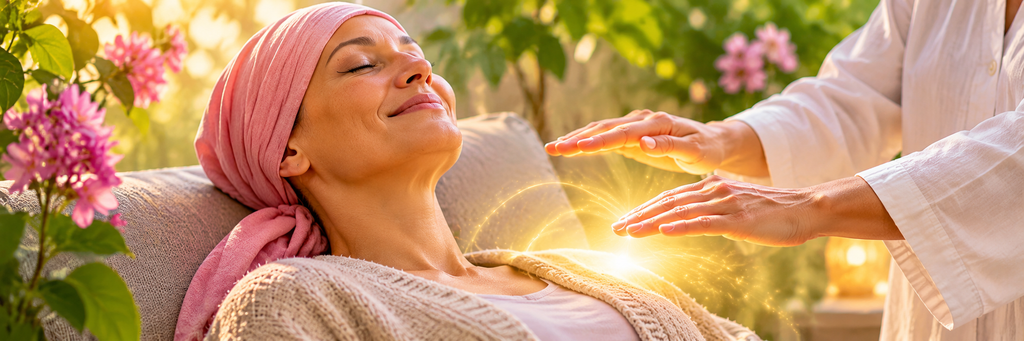
Reiki and support for cancer patients
Receiving a diagnosis of an illness such as cancer represents a challenge that goes far beyond the physical aspects.
Uncertainty, fear, exhaustion, anxiety, and the emotional impact that may accompany medical treatments make it especially important to provide comprehensive care for the individual.
Reiki has been used as a complementary practice during cancer care, including chemotherapy treatments, with the purpose of providing well-being, tranquility, and emotional support.
In 2025, a randomized clinical study published in the scientific journal Seminars in Oncology Nursing, involving 58 cancer patients, reported favorable results in reducing pain, anxiety, and stress in the group that received Reiki.
Likewise, a scientific review published in 2024 analyzed its possible effects on anxiety, finding encouraging results, although these varied depending on the characteristics of the participants and the conditions studied.
These studies open up new possibilities for research, but they need to be supported by broader and more rigorous scientific work.
It is important to point out that Reiki has not been proven to cure cancer or replace chemotherapy, radiotherapy, or any other prescribed medical treatment.
Its purpose in these processes is to accompany the individual, also addressing their emotional needs and general well-being.
Because behind every diagnosis there is a human being who feels, who faces fears, who needs hope, and who deserves to be treated with sensitivity, respect, and empathy.
Reiki as a self-care practice
One of the most interesting aspects of Reiki is that we do not necessarily have to wait until we experience physical or emotional discomfort before exploring its practice.
We can incorporate it into a self-care routine, alongside a balanced diet, physical activity, adequate rest, meditation, and professional healthcare.
We live in a society in which we are constantly exposed to stimuli, demands, and responsibilities. On many occasions, we forget to dedicate time to ourselves.
We learn to listen to others, but rarely do we listen to ourselves.
We learn to care for those we love, but forget the importance of caring for ourselves.
Reiki invites us to reclaim that personal space, recognize our emotions, cultivate tranquility, and develop greater awareness of our well-being.
Although it has not been demonstrated that Reiki prevents diseases, it can form part of personal habits aimed at managing stress and caring for ourselves as a whole.
A practice that anyone can learn
Reiki is a method that can be learned by anyone interested in understanding and developing its principles through appropriate training.
Learning Reiki makes it possible not only to receive a session, but also to practice self-Reiki and, with the appropriate preparation, offer sessions to other people.
However, being a Reiki practitioner also means accepting an ethical responsibility.
It is not about promising results, creating false expectations, or claiming the ability to cure diseases. It is about offering support with respect, empathy, sensitivity, and honesty, recognizing that each person experiences their own processes differently.
As a non-invasive practice, no direct harmful effects associated with Reiki have been identified. Nevertheless, its application must take place with the person’s consent and without interfering with any medical care they may need.
Conventional medicine and Reiki: two paths that can meet
The true purpose of integrating different disciplines should always be the well-being of the human being.
Conventional medicine has fundamental scientific, diagnostic, pharmacological, and surgical tools for the prevention and treatment of diseases.
Reiki, for its part, offers, through its energetic and spiritual philosophy, a space for support, relaxation, and personal connection.
It is not about determining which is better, or replacing one with the other, but about understanding how they can coexist responsibly.
Treating an illness and accompanying a person throughout their process are different actions, but both are part of more humane care.
The responsible integration of complementary therapies and conventional medicine requires communication, knowledge, research, mutual respect, and, above all, an ethical commitment to the person who places their trust in us.
Final reflection
Health is much more than the absence of disease. It is also related to the way we live, think, feel, relate to others, and find meaning in our existence.
Reiki reminds us of the importance of looking within ourselves, recognizing our needs, and seeking harmony between body, mind, emotions, and spirit.
Perhaps one of the greatest advances in caring for human beings does not consist solely in discovering new ways to treat their illnesses, but also in recovering the ability to see, listen to, understand, and accompany them as a whole.
Science and spirituality can coexist through knowledge, respect, and responsibility, without either needing to replace the other.
We should not wait for the body to manifest an ailment before understanding the importance of taking care of ourselves. Well-being is also built every day.
Stay well with yourself, listen to your body, take care of your emotions, live in gratitude, give thanks, love, and be happy.
Namaste.
About the Author
Eugenio Antonio González Melo
Gendai Reiki · Shihana Reiki
I am Eugenio Antonio González Melo, Shihana Reiki and Reiki Shihan of the Gendai Reiki Healing Association of Japan. I studied at the Fundación Hispanoamericana Mikao Usui S.C., where I attained the highest level of training: Shihan Reiki.
My journey in Reiki began under the guidance of Shihana Mauricio López, who performed my initiation and attunement. Later, I also had the honor of receiving an attunement from Reverend Inamoto Sensei, creator of the Komyo Reiki Do® system, at Mount Kurama, the place where our beloved master Mikao Usui Sensei attained his Satori.