I Have Fibromyalgia. But I Am Not Fibromyalgia.
By Elke Franzeck
Part 3 of the series Fibromyalgia: Understanding, Caring and Living

A chronic illness can be part of our story without having to write our entire story on its own.
Learning to listen before the body cries out
Living with fibromyalgia has also taught me something that goes beyond any clinical definition:
the body has limits.
For a long time, we may try to ignore them, negotiate with them or push beyond them.
Until we realise that respecting the body is not a sign of weakness.
It is an act of self-care and self-awareness.
When the body asks us to live differently
Today, when I support someone living with fibromyalgia, I do not see only symptoms described in a textbook.
I recognise some of those silent battles.
As a therapist, I study fibromyalgia. As someone who lives with it, I feel it in my own skin.
And perhaps it is precisely at the intersection of scientific knowledge, clinical experience and personal lived experience that I find my way of caring.

I do not want to teach anyone to fight against their own body.
I want to help each person understand it better.
To recognise its signals.
To find resources.
To regain autonomy.
Living without guilt
Fibromyalgia can also teach us that not every day has to be the same.
There are good days.
And there are difficult days.
Learning to recognise the difference does not mean giving up.
It means understanding where to direct the energy we have.
It means respecting the body’s limits without abandoning our own lives.
It means being able to embrace the good days fully and get through the difficult ones with less guilt.
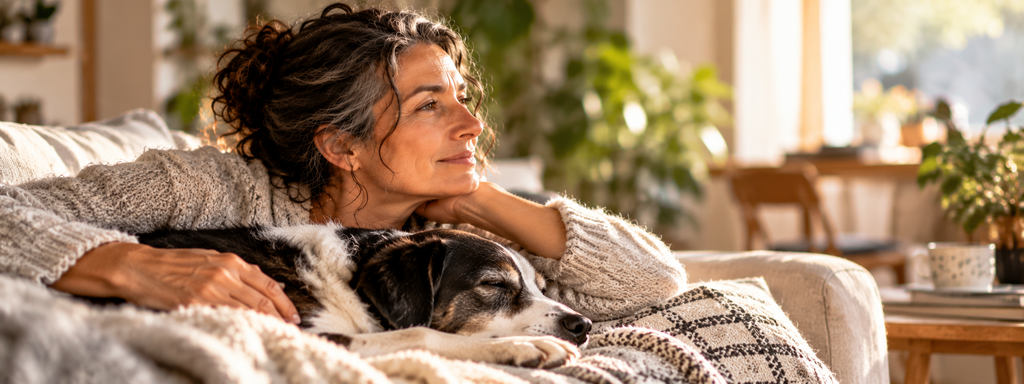
I have fibromyalgia. But I am not fibromyalgia.
There is an enormous difference between these two statements.
The diagnosis can be part of our story.
It can change some of our choices.
It can require adjustments.
It can teach us to look at the body differently.
But it does not have to define our entire identity.
I do not want to teach anyone to fight against their own body.
I want to help each person understand it better.
To recognise its signals.
To find resources.
To regain autonomy.
Because a chronic illness can be part of our story without having to write our entire story on its own.

A different way of caring
Perhaps it is precisely at the intersection of scientific knowledge, clinical experience and personal lived experience that I find my way of caring.
As a therapist, I study fibromyalgia.
As someone who lives with it, I feel it in my own skin.
And it is from this place that I seek to support each person:
not by teaching them to fight against their own body,
but by helping them understand it better.
To recognise its signals.
To find resources.
To regain autonomy.
Because caring also means allowing a person to continue to recognise themselves beyond their diagnosis.
About the author
Integrative and Transpersonal Clinical Therapist · Naturopath · Clinical Aromatherapist · Reiki Master
Originally from Porto Alegre, in southern Brazil, Elke is the mother of three daughters and one son, and grandmother to three grandchildren. She has lived in Coimbra, Portugal, for 17 years.
Her journey brings together training, experience and different therapeutic approaches, but one principle runs through her work: the understanding that each person carries a unique story and cannot be reduced to a technique, a diagnosis or a formula for care.
For Elke, care begins even before an approach is chosen. It begins with listening, welcoming and respecting the story of the person who seeks support.
Elke Franzeck
Integrative Clinical Therapist
Caring for the soul also means allowing life to blossom.
Additional Considerations for Fibromyalgia Care
In fibromyalgia, hypersensitivity can make techniques commonly considered relaxing uncomfortable. For this reason, hot stone therapy, cupping therapy, electromagnetic impulse acupuncture, and other techniques should be assessed individually. They should not be considered first-line interventions, as the evidence for their specific benefits is limited or insufficient.
When using aromatherapy, it is important to check for allergies, asthma, fragrance sensitivity, pregnancy, and possible contraindications. Essential oils should not be ingested or applied undiluted to the skin.
Persistent sleep disturbances should also be investigated, including possible sleep apnea, restless legs syndrome, or other conditions that may worsen fatigue.
About the Therapeutic Protocols
The protocols used in her practice were developed by Elke Franzeck, based on her professional experience and clinical practice.
Their use should always be individualized and carried out with the guidance of a qualified therapist, taking into account each person’s needs, health conditions, and individual circumstances.
These guidelines are for informational purposes only and do not replace an individualized assessment or the care provided by the healthcare professionals involved in supporting people living with fibromyalgia.