Between Symbol and Experience: The Historical and Cultural Evolution of Reiki
By Alfredo Aguilera Saldaña
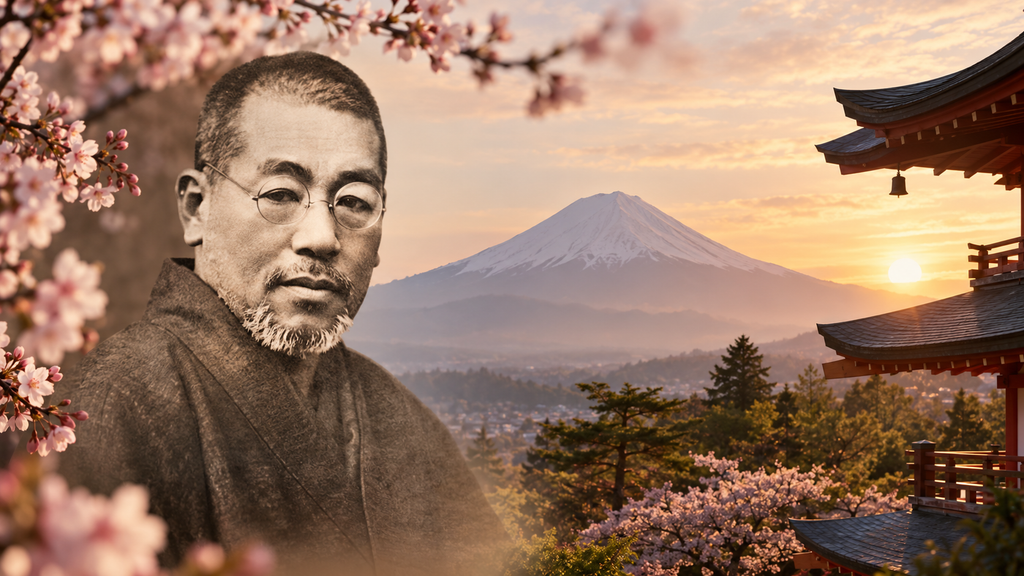
It is very common for passionate debates to arise in practice circles about the search for the “original technique,” the exact pronunciation of the kotodamas, or the precise interpretation of the symbols as Mikao Usui conceived them at the beginning of the 20th century. In that desire to honor the source, we sometimes fall into a subtle illusion: believing that by studying historical texts, memorizing concepts, or repeating traditional rituals, we are experiencing Reiki exactly as a Japanese person of the Taishō era did, or as a practitioner in Kyoto experiences it today.
However, the reality is deeper and more direct: interpreting and studying Japanese culture or thought from the perspective of 21st-century Western society is not the same as inhabiting that culture, living within it, and being Japanese.
Culture is not merely a theory learned through books or seminars; it is an atmosphere breathed from childhood. When a Western practitioner analyzes the Gokai (the Five Precepts) or investigates Usui’s worldview, they inevitably do so through their own mental and social structure: an environment shaped by individualism, analytical logic, digital immediacy, and a different history.
For a Japanese person, on the other hand, notions that require complex explanations for us are part of the natural fabric of everyday life:
Ma, that space of pause and silence, is not merely a meditation strategy; it is part of the structure of language, architecture, and the way people relate to one another.
Wa, collective harmony, is not sought as an abstract spiritual goal, but as an invisible norm of coexistence in which the well-being of the group comes before the “I.”
The relationship with nature does not arise from a modern conceptual movement, but from an everyday Shinto experience in which the environment is alive and inhabited by the sacred.
Trying to “think or feel like a Japanese person” from the urban and Western life of the 21st century is like translating a poetic work while removing its original language: we can grasp the general idea and the beauty of the message, but the intimate nuance belongs only to the person who grew up in that language. For this reason, when we study original Japanese Reiki in the West, what we are actually doing is a cultural and contextual approximation. We learn to observe a conceptual map that is not our own in order to enrich our own, but without the possibility of embodying the sociocultural experience that gave rise to it.
Takata’s Bridge: The Necessary Adaptation
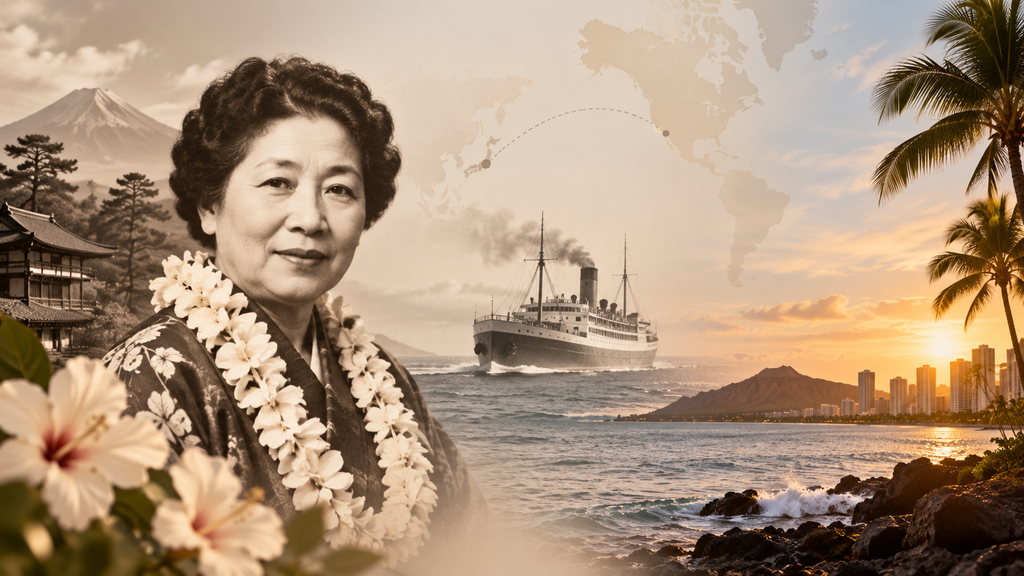
This phenomenon of adaptation is neither new nor foreign to the history of Reiki; it began with the system’s own expansion throughout the world. When Hawayo Takata introduced the practice in Hawaii and subsequently throughout the West, she encountered a complex historical and social context. For a discipline born in Taishō-era Japan to be understood and accepted in a Western society — with a scientific, pragmatic outlook and a strong Judeo-Christian heritage — it was necessary to adapt the teaching.
Takata did not distort Reiki by chance; she carried out a cultural translation. She simplified the structure, systematized the hand positions, emphasized the practical aspect of physical healing, and adapted the philosophical framework so that it would be accessible to a different mindset. Thanks to this adaptation, Reiki survived its isolation and became a global phenomenon.
Why Must the Practice Evolve?
Mikao Usui did not design his system as a static dogma frozen in time. He lived through the transition of Japan from the Meiji to the Taishō eras, a period of profound transformation in which traditional spirituality, Tendai Buddhism, Shinto, and the medical influences of the time naturally intertwined. For his students in the 1920s, his teachings were a coherent extension of their own reality.
Recognizing these differences of origin and the historical adaptations does not diminish the value of our practice; on the contrary, it frees it from rigid dogmatism. Honoring the roots of Reiki does not require us to pretend to belong to a culture that is not our own, nor to become obsessed with an unattainable historical “purity.”
Reiki must evolve because human consciousness and society’s needs change. Just as Usui responded to his time and Takata to hers, today’s practitioner is called to integrate the essence of the teaching — the cultivation of the mind, compassion, presence, and energetic balance — with the tools, language, and understanding of our own time. A tradition that refuses to engage with its present becomes a museum; a tradition that evolves honestly and with respect for its source remains a living path of transformation.
And this has been a natural part of all the great teachings and traditions of humanity. No wisdom remains unchanged in its external form when it crosses the boundaries of time and culture; all have had to be translated, reinterpreted, and embodied by each generation in order to keep their spirit alive.
We have seen this not only in the great sacred texts such as the Bible, the Torah, the Quran, the Bhagavad Gita, or the Tao Te Ching, but also in the philosophical currents of antiquity, such as Greco-Roman Stoicism, the philosophies of classical Greece, Neoplatonism, the dialogues of Confucianism, Hermetic thought, and even the ancestral traditions and medicinal knowledge of the Indigenous peoples of the Americas.
In each of these paths, the external form had to be shaped so that the essence would not die; the cultural framework adapted so that the central message could remain useful and transformative. Reiki is no exception: its greatness does not lie in remaining frozen like a museum piece in the past, but in its ability to continue being a living, coherent, and vibrant light for the human being of the present.
How do you understand the balance between respecting the historical roots of Reiki and adapting it to the needs of our society today? I would like to read your opinion in the comments.
About the Author
Alfredo Aguilera Saldaña is a retired administrator and academic from the University of Guanajuato, Mexico. He currently works as a seeker, writer, and teacher of systems of personal evolution and energetic healing.
Over the last several decades, he has dedicated his work to the creation of healing methodologies and the development of a philosophical and existential literary narrative. His experience brings together education, Reiki, energetic practices, research, and literature in a continuous search to understand the human being.
Reiki CEAAN System