Integrative Naturopathy: the Search for Balance Through Nature
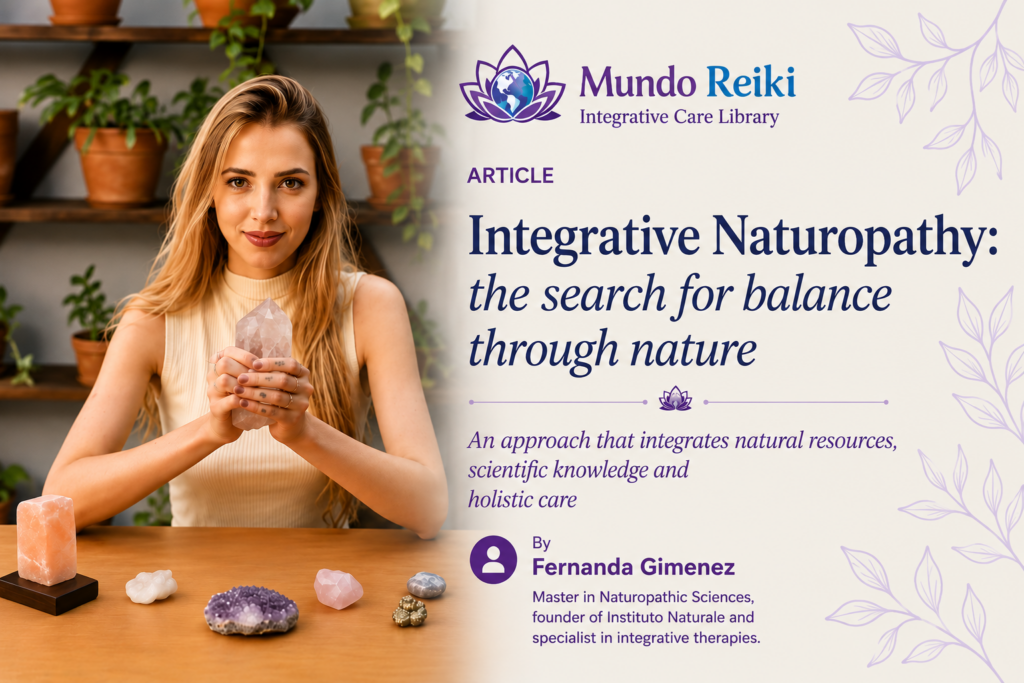
An approach that brings together natural resources, scientific knowledge and integrative care
Long before medicines were produced in laboratories, human beings turned to nature in search of relief from pain, ways to care for illness and methods to preserve health. Plants, roots, seeds, flowers, food, water, sunlight and many other natural resources have accompanied humanity throughout history and have been part of traditional healing systems for centuries.
It is from this long-standing relationship between people and nature that one of the guiding principles of Naturopathy emerges: the understanding that the body has its own capacity for self-regulation and that natural resources, when used appropriately and responsibly, can contribute to maintaining and restoring health.
Naturopathy can be understood as a system of care that uses natural resources and lifestyle changes to promote health, prevent imbalance and support the body’s natural healing processes. It takes a broad perspective, seeking to understand the individual as a whole by considering not only symptoms, but also physical, emotional, behavioral, environmental and lifestyle factors.
But where did Naturopathy come from?
Although the term Naturopathy is relatively recent, its principles are ancient.
Many cultures throughout history have documented the use of medicinal plants, food, massage, sunlight and other natural resources as part of health care.
In Ancient Greece, for example, Hippocrates—widely regarded as the father of Western medicine—believed that nature itself possesses healing power, an idea that later became one of the foundations of Naturopathy.
Modern Naturopathy began to take shape in the late nineteenth century, particularly in Europe and North America. Its development was influenced by natural health movements that emphasized nutrition, herbal medicine, hydrotherapy, physical activity, contact with nature and healthy living as essential elements of health.
One of the key figures in this history was the German physician Benedict Lust, who played a central role in introducing and developing Naturopathy in the United States. Over time, Naturopathy evolved into a broader therapeutic approach centered on prevention, stimulating the body’s natural healing mechanisms and identifying the underlying causes of imbalance rather than simply managing symptoms.
Although different schools of Naturopathy have emerged around the world, they continue to share common principles: treating the individual as a whole, promoting prevention, encouraging healthy lifestyles and using natural resources consciously and individually.
It is important to recognize that Naturopathy did not arise as a single technique or isolated treatment. Instead, it developed as an integrative approach that combines different areas of knowledge under a holistic understanding of human health.
What is Integrative Naturopathy?
Rather than focusing exclusively on a disease or isolated symptom, Integrative Naturopathy seeks to understand the whole person. This means considering physical, emotional, mental, behavioral, energetic, social and environmental aspects that may influence health and illness.
Imagine someone who experiences frequent headaches.
An integrative approach does not simply focus on relieving the pain. It also explores sleep quality, nutrition, hydration, stress levels, work routine, excessive stimulation, muscular tension, dietary habits and other factors that may be contributing to the condition.
This does not mean ignoring the symptom. On the contrary, symptoms provide valuable information about what is happening within the body. The goal is to broaden the investigation and understand the context in which the imbalance developed.
This shift in perspective is what makes Integrative Naturopathy unique. Instead of seeing a person merely as someone with a disease, it recognizes each individual as unique, with personal experiences, habits, characteristics and needs.
Which resources does Naturopathy use?
Integrative Naturopathy may include a variety of natural resources and therapeutic practices, selected according to each person’s individual needs.
These include herbal medicine, aromatherapy, flower essence therapy, nutrition and nutritional therapy, breathing and relaxation techniques, body-based practices, hydrotherapy and other natural resources.
Some approaches also incorporate therapies focused on energetic and vibrational aspects of the individual.
Each resource has its own indications, limitations and contraindications. Therefore, it is not enough to simply know about a medicinal plant, an essential oil or a therapeutic technique. It is equally important to understand when, why and how to use them appropriately.
Knowledge is what transforms a natural resource into a safe and effective therapeutic tool.
Nature and science walk together
There is a common misconception that everything natural is automatically safe or that Naturopathy stands in opposition to science and conventional medicine.
In reality, a responsible approach recognizes that science and nature complement one another.
Medicinal plants contain active compounds. Essential oils are composed of chemical molecules. Food provides nutrients involved in metabolic processes. The human body responds biologically to all these stimuli.
Understanding nature therefore also means understanding chemistry, pharmacology, physiology, contraindications and possible interactions.
Contemporary Integrative Naturopathy seeks to combine traditional knowledge passed down through generations with the scientific evidence available today.
This means valuing nature without romanticizing it.
A medicinal plant may provide benefits, but it may also produce adverse effects. An essential oil may have therapeutic properties but may cause irritation or sensitivity if used incorrectly. A food that benefits one individual may not be the best choice for another.
For this reason, naturopathic care requires knowledge, responsibility and individualized guidance.
We are part of nature
Perhaps one of Naturopathy’s greatest lessons is reminding us of something that modern life often makes us forget: we are also part of nature.
Our bodies have rhythms, needs and natural cycles. We need sleep, movement, nourishment, rest, healthy relationships, sunlight and time to reconnect with ourselves.
When we view health from this perspective, we realize that self-care should not begin only when illness appears.
Prevention is also a form of care.
Naturopathy encourages us to care for our health before imbalance develops, helping us understand which habits support—or hinder—the body’s proper functioning.
Perhaps this explains why Naturopathy has attracted increasing interest in recent years.
More and more people seek to understand their bodies, improve their quality of life and take a more active role in decisions related to their health. Interest in natural practices, conscious nutrition, medicinal plants and integrative care continues to grow.
Within this context, Naturopathy invites us to broaden our perspective.
It is not simply about finding a natural solution for illness. It is about understanding the individual as a whole, recognizing the complexity of the human body and using available resources consciously, responsibly and according to each person’s unique needs.
Nature has always surrounded us.
The plants now studied by science were already used by our ancestors. The aromas explored through aromatherapy have accompanied civilizations for centuries. The foods we consume every day directly influence the way our bodies function.
Naturopathy invites us to rediscover all of this—with greater knowledge, greater awareness and, above all, greater respect.
Because caring for health through nature does not simply mean using natural products. It means understanding nature, understanding ourselves and learning how to build a safe and intelligent relationship between the two.
This is only the beginning of our journey. In future articles we will explore medicinal plants, essential oils, nutrition, natural therapies and many other resources that form part of Integrative Naturopathy and contribute to health promotion and overall well-being.
The more we understand nature, the more we discover that it has much to teach us about health, balance and, ultimately, about ourselves.
About the Author
Fernanda Gimenez is a Master in Naturopathic Sciences, postgraduate in Clinical Phytotherapy, Aromatherapist, Flower Essence Therapist, Crystal Therapist, Natural Cosmetics Designer, Yoga Teacher and Public Relations professional. Her work combines scientific knowledge, nature and education to promote health, well-being and integrative care.
Founder of the Instituto Naturale, she is dedicated to educating professionals and sharing knowledge about integrative therapies, herbal medicine, aromatherapy and natural health practices, helping thousands of students deepen their understanding of natural approaches to wellness.
As a contributor to the Mundo Reiki Library, she shares content that connects nature, science and conscious living, encouraging a more responsible relationship with health, quality of life and the balance between body, mind and nature.
Learn more about her journey:
👉 Fernanda Gimenez: When Nature, Knowledge and Purpose Come Together
https://mundoreiki.com.br/fernanda-gimenez-nature-knowledge-purpose/